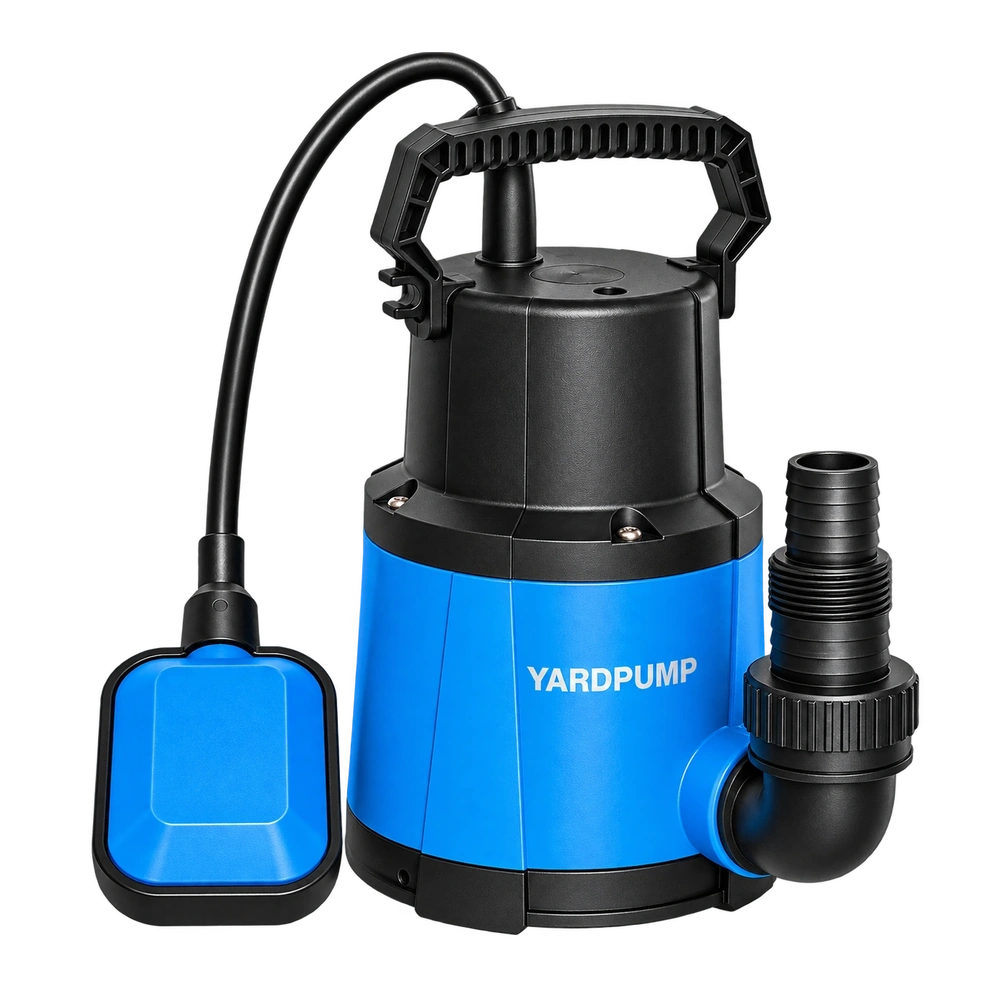
Suppose a static seal in a plastic submersible pump starts leaking after repeated use. On removal, the O-ring has several small bites along one edge. Check whether they line up with the pressure direction and a clearance between the mating parts. Differential pressure can force rubber into that clearance, and repeated loading can tear away small pieces. A harder ring can improve extrusion resistance in some arrangements. It does not remove the need to verify the loaded clearance and will not correct a ring cut by a chamfer during assembly.
Trace the damage in the direction of pressure
When the differential pressure acts in one known direction, it pushes the O-ring toward the low-pressure side. If there is clearance there, the rubber may be forced into it. Look at the groove edge and the gap between assembled parts together. Comparing a spare with the damaged ring by hardness alone is not enough. A cut made during installation calls for a review of the entry path, chamfers, burrs or misalignment. Possible extrusion marks should correspond to the edge exposed under pressure. Damage distributed around the ring can also arise during cleaning, assembly or removal. A photo shows the shape of the damage; it cannot establish pressure direction or cause by itself.
Consider two illustrative pumps using the same specified O-ring. Their unloaded clearances at room temperature are close. In the first, the joint opens locally at the specified pressure and temperature, and bites develop along the joint on the low-pressure side. The second has a single cut aligned with the entry chamfer immediately after assembly. The first calls for a loaded-clearance check, the second for an assembly review. Without that evidence, do not record both as a compound that was too soft. Allowable clearance depends on the seal geometry, pressure differential, temperature, material and manufacturer data. This example sets no universal limit.
Establish dimensions in the assembled and loaded condition
Have qualified staff isolate the pump and relieve pressure as required before disassembly. Preserve the ring's orientation and photograph the first leak location, damaged side and groove edge. Record pump and part revisions, seal lot, liquid, temperature, pressure cycles and service time. Check worst-case part tolerances, eccentricity, support and fasteners. A housing can change clearance with pressure, temperature or long-term deformation. Use approved equipment and conditions where a loaded measurement is needed. Do not plug the discharge or raise pressure beyond the pump's limits for a trial.
Check compound compatibility and hardness against the documented liquid, temperature and drawing. Changing hardness can also change installation force and how the ring behaves in the groove. Increasing squeeze alone can introduce assembly or life problems. Evaluate the complete joint at its actual dimensions and allowed duty. Retain a good comparison part from the same lot, and avoid replacing the ring, adding compound and changing fasteners all at once. Otherwise a successful test does not tell you which change solved the problem.
Place a backup ring only as the design permits
Where an approved design uses a backup ring, its job is to limit the O-ring's movement into the clearance. In a typical unidirectional arrangement, it goes on the low-pressure side of the O-ring. If differential pressure can reverse, verify the approved arrangement for both directions rather than choosing a side by appearance. Check groove space, compatibility of the backup material with the liquid and temperature, and the specified squeeze and fit after installation. A backup ring does not repair a damaged groove, housing or O-ring. Record the revised configuration for purchasing or service, then repeat the agreed pressure cycling, temperature and sealing checks.
If bites recur in the same location, compare pressure direction and orientation with the previous return. Repetition on one side is a reason to check eccentricity and local clearance before another increase in hardness.
Frequently asked questions
Does a bite on the low-pressure side prove extrusion?
It is a useful clue. Confirm pressure direction, actual clearance and whether assembly could damage the ring in the same place.
Is a harder O-ring better than adding a backup ring?
There is no general answer. Establish loaded clearance and compound conditions, then verify the complete seal using the relevant manufacturer data.
Should a backup ring go on one side if pressure reverses?
Do not assume a one-way arrangement. Use a verified design for both directions with the correct groove space and squeeze.