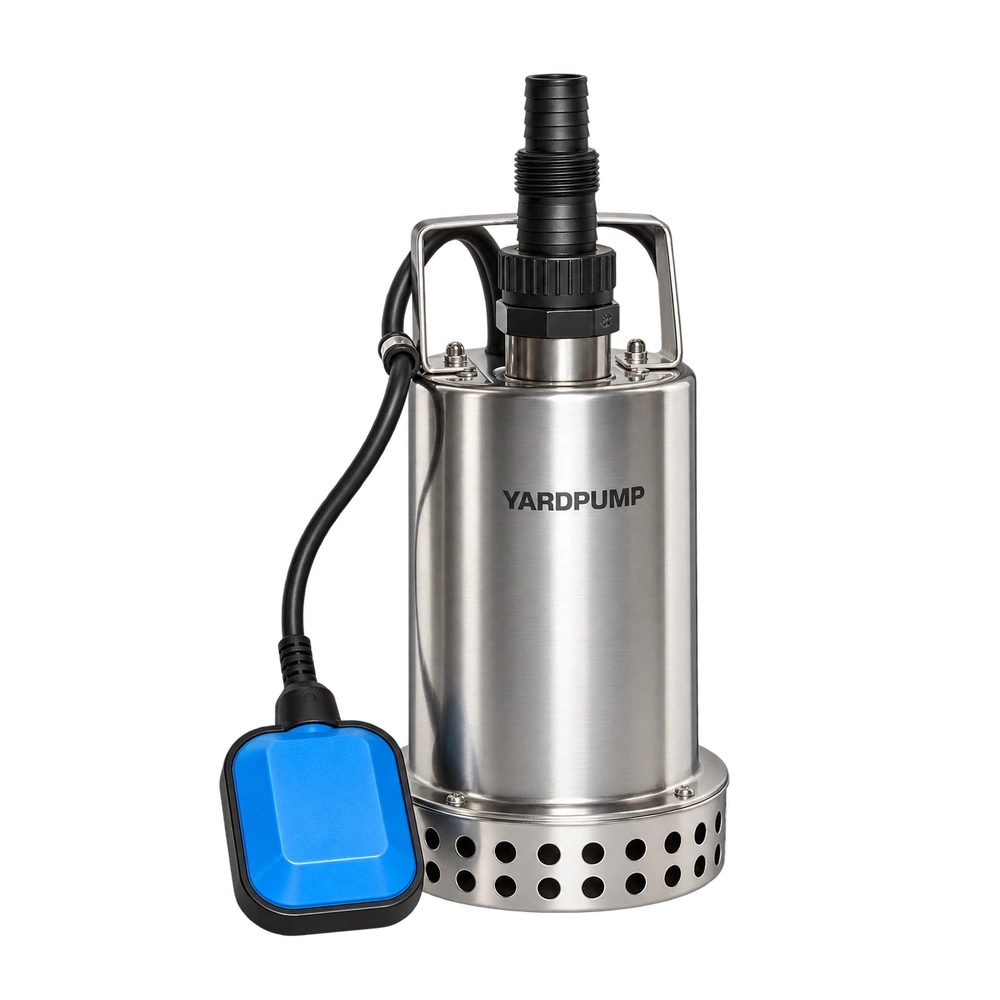
A plastic pump joint seeps, so someone installs a thicker O-ring and tightens the screws further. A short dry result does not establish a reliable design. A static seal needs sufficient, controlled squeeze and an appropriate gland volume. Excess compression, overfilling, housing distortion or installation damage can all create leakage.
Squeeze and gland fill describe different things
Squeeze describes compression of the cross-section in the sealing direction. Gland fill concerns elastomer volume relative to the available groove volume. The material can change shape, but its volume cannot simply be compressed without limit. A reasonable-looking squeeze can coexist with inadequate room if the groove is narrow, the ring is oversized or the material swells in service.
Face seals, radial static seals and moving seals have different conditions. Do not transfer one percentage indiscriminately between them. Pressure direction, extrusion gap, hardness, temperature and medium also influence the design. This article explains static-seal geometry rather than assigning a universal pump value.
Calculate the geometry, then examine tolerance extremes
For illustration, assume a free cross-section diameter of 3.0 mm and an assembled gap of 2.4 mm in the compression direction. The simplified squeeze is (3.0 − 2.4)/3.0, or 20%. This is a calculation example, not a recommendation.
Cross-section tolerance, groove depth, face flatness and mating variation change the actual local squeeze. The example does not establish fill, because complete groove width, circumference and effective volume have not been defined. Twenty-percent squeeze is not twenty-percent gland fill.
Ask for assessment at relevant tolerance extremes rather than a subtraction using nominal dimensions only. Where the shape or assembly is more complex, use the design’s appropriate calculation and verification method.
| Check | Main question | Needed information |
|---|---|---|
| Squeeze | Adequate contact without excessive compression? | Section, gap and geometric tolerances |
| Fill | Space for deformation and material change? | Complete gland geometry and material state |
| Extrusion | Can material enter the clearance under pressure? | Pressure, gap, material and support |
| Installation | Cutting, twisting or displacement? | Lead-in, surfaces and process |
Tightening cannot replace gland design
Where the joint has a hard stop, additional torque after the specified seating condition normally does not provide a controlled way to improve seal geometry. It may instead damage threads, inserts or plastic. A joint without a clear stop needs careful assessment of clamp load and deformation.
One screw feeling tight does not prove uniform compression around the ring. Cleaning, chamfers and lead-in geometry also matter. A ring can be cut by an edge, twisted in its groove or trapped across a joint without an obvious external sign.
Any assembly lubricant must be approved for compatibility with the elastomer, medium and intended use. An arbitrary grease is not a harmless aid. Electrical equipment must be isolated before opening a sealed joint.
Verify changes after relevant exposure
Some elastomers swell in a medium or change volume with temperature. Plastic housings may also change with temperature and moisture condition. Where relevant, repeat sealing checks after specified environmental exposure. Match the test to the product claim instead of using an unrelated extreme to imply a lifetime result.
Preserve installation orientation, local compression marks, cuts, groove burrs and housing deformation during investigation. Location-specific evidence is more useful than a broad “bad rubber” conclusion.
A new material grade or cross-section requires review of geometry and assembly. Better chemical resistance does not make a different elastomer a dimensionally compatible substitute. The useful approval concerns the installed seal, not the material name alone.
State the pressure-difference direction in a static-seal test. Some joints respond differently under positive and negative differential pressure, so one direction does not establish every service state. The design should determine appropriate coverage. Keep ring batch and gland revision together to distinguish material changes from geometry changes.
Frequently asked questions
Is a thicker O-ring the quickest remedy for leakage?
It may hide the cause or create another problem. Check the gland, tolerances, assembly and service condition before an approved replacement.
Can extrusion clearance be ignored in a low-pressure static seal?
Not automatically. Evaluate actual pressure difference, temperature, material and structure rather than relying on the label “low pressure”.
Does an unbroken ring prove that it is undamaged?
No. Twisting, local cuts, permanent deformation and uneven compression can impair sealing without breaking it.