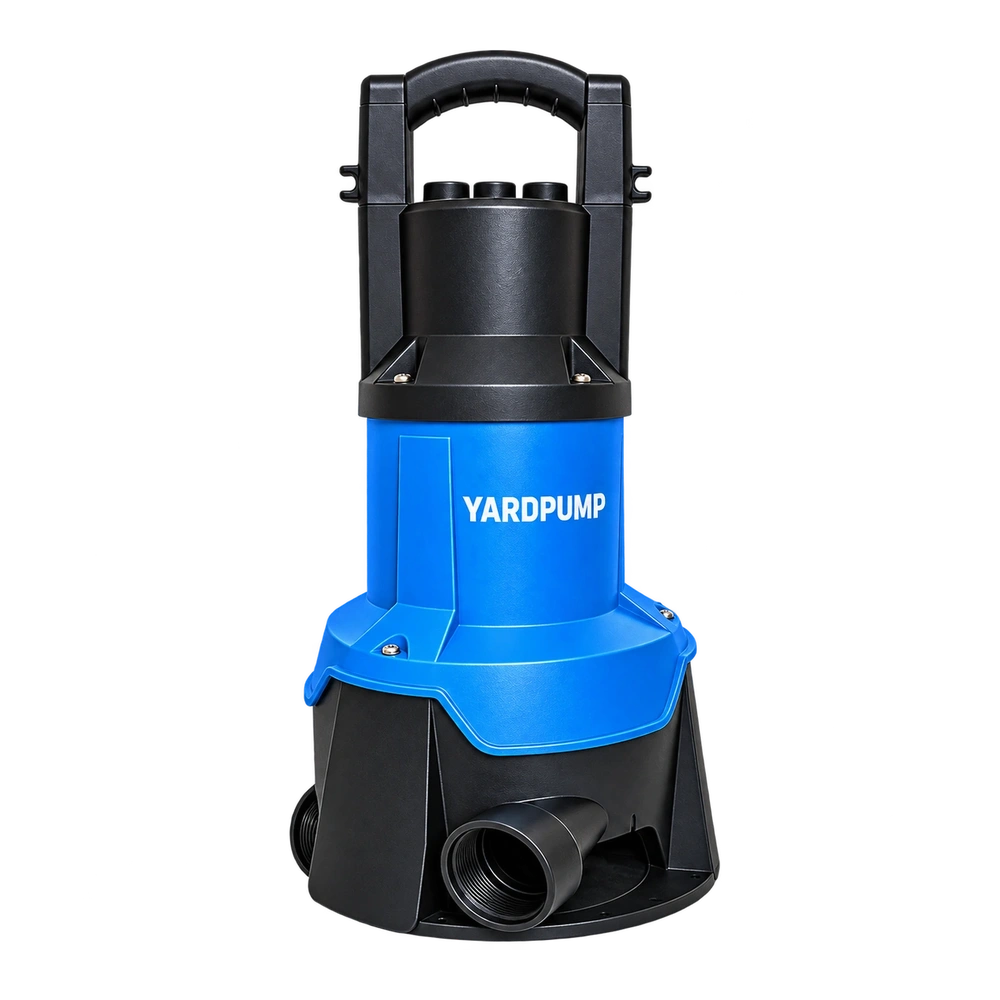
The stator and winding revision are unchanged, yet input rises after the stator enters the housing and the motor runs hotter. Was the winding wire substituted? Do not start with that conclusion. An interference fit introduces mechanical stress, while assembly can also change core geometry, air gap and heat transfer. Use a controlled comparison to distinguish those effects.
A steel grade does not describe the finished core completely
Electrical steel in a completed motor does not necessarily behave like an unstressed material specimen. Cutting, stacking and external compression can affect its condition. Mechanical stress can alter magnetic behaviour and losses, but the magnitude depends on material, construction and stress distribution.
Results from another motor cannot be transferred as a percentage prediction for a compact submersible pump. They support investigating the mechanism, not claiming a particular penalty or saving for an untested product.
Likewise, equal steel grades do not independently establish equal assembled core loss. A temperature change after assembly does not by itself prove excessive interference either. Winding damage, air-gap eccentricity, bearing resistance and changed cooling remain alternative explanations.
The fit also performs mechanical functions
The housing-to-stator interface has positioning, retention and thermal duties. Less interference is not automatically more efficient, and greater interference is not automatically more reliable. An insufficient fit may compromise retention or contact; excessive or uneven compression may introduce unwanted stress and deformation.
Consider a hypothetical development comparison in which the housing fit changes while other configuration details remain controlled. Record actual dimensions, roundness, assembly method and electrical results. The peak press force alone cannot describe the final stress distribution or prove correct seating.
| Comparison area | Record | Avoid this shortcut |
|---|---|---|
| Component dimensions | Actual fit, roundness and temperature | Nominal tolerances alone |
| Pressing process | Tooling, direction and final location | Peak force means correct assembly |
| Electrical condition | Supply, frequency and real input | Different supplies are comparable |
| Complete motor | Air gap, friction, cooling and heat | All extra heat is core loss |
No-load input is not pure iron loss
Even without an impeller delivering water, motor input can include winding loss, mechanical friction and other contributions. If the rotor, bearings or cooling conditions differ before and after assembly, subtracting the two readings does not reliably isolate core loss.
Define the measurement boundary and use an appropriate method to separate or assess the relevant losses. Record real input power rather than interpreting current alone. Power factor and magnetic operating conditions can also affect how a current change should be understood.
Do not create an unsuitable dry-running test merely to obtain a supposedly clean no-load condition from a water-cooled submersible motor. A temporary test arrangement needs an approved method. Qualified personnel must perform electrical checks, with power isolated and capacitor energy addressed before dismantling or adjustment.
Make the comparison reproducible
Preserve material-lot, core, winding, impregnation and assembly identities. Define sample numbers, test conditions and measurement repeatability before interpreting differences. A cold motor and a warm motor are not automatically equivalent comparison samples.
Where useful, examine assembled geometry separately from running behaviour. If a fit condition correlates with an abnormal result, determine whether the relationship can be reproduced and whether the proposed correction preserves retention, vibration performance and heat transfer.
One improved specimen is a development signal. It is not a production-wide energy claim. Broader release needs evidence appropriate to the design and manufacturing variation.
Ask for the right purchasing evidence
For a disputed or revised construction, request the fit revision, critical dimensional relationships, process controls and final assembly verification. Avoid specifying low no-load current as the only objective, or treating a larger interference value as a quality grade.
The final decision should combine the required pump duty, temperature behaviour and mechanical reliability. This framework does not disclose or infer a particular YARDPUMP housing fit or predict its loss sensitivity.
Frequently asked questions
Does higher current after assembly prove higher core loss?
No. Review real power, power factor, mechanical condition and the measurement boundary.
Can reducing the stator diameter solve the problem?
Not as an informal repair. Retention, air gap, thermal contact and insulation may be affected.
Can motors using the same steel grade be compared by temperature alone?
No. Processing, stacking, assembly, winding and cooling conditions must also correspond.