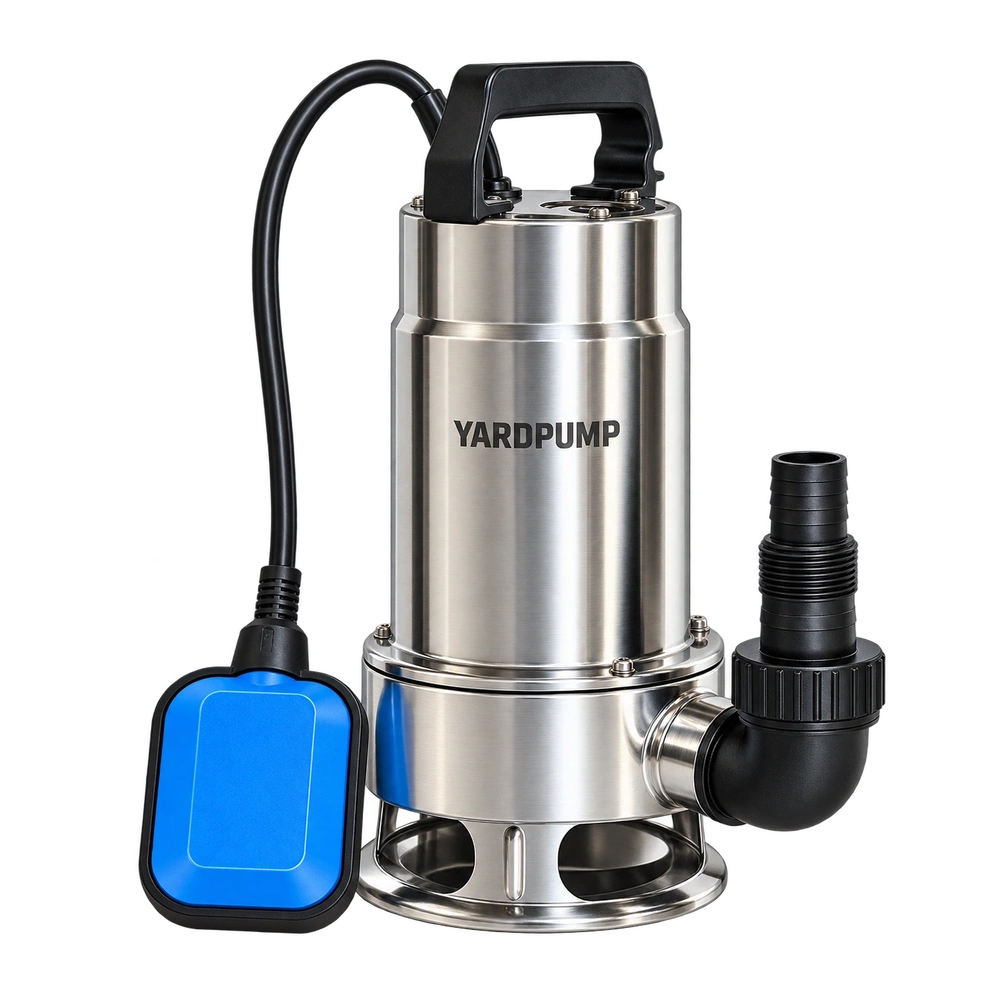
A service photograph shows orange spots on a stainless pump housing, and the customer immediately questions the material. First distinguish rust from deposited iron from corrosion of the component itself. The appearances can overlap, and both mechanisms can coexist. Grade verification, surface examination and the service environment are needed before choosing cleaning, process correction or a different material arrangement.
Stainless performance depends on the surface
Stainless steel relies on its passive surface condition. It is not immune to every form of corrosion. Carbon-steel tools, grinding dust or handling contact can deposit iron that later rusts on the surface.
Rust colour alone does not identify the base grade or prove that the whole housing has suffered the same depth of attack. Conversely, chlorides, temperature, deposits and oxygen-restricted crevices can promote local corrosion of stainless material itself.
A deep pit near a fastener or beneath a washer is a different concern from light surface contamination. A stainless housing also does not establish equivalent corrosion resistance for every fastener, weld condition or other wetted part.
Preserve position and morphology before cleaning
Record whether the marks occur on open surfaces, welds, contact interfaces or around fasteners. Take close photographs and wider views that locate them on the assembly.
Retain the liquid category, temperature, cleaners, immersion and shutdown history, and contact with other metals. A single photograph taken after cleaning can remove the most useful evidence about the original distribution.
Electrical abnormality, cracking, leakage or suspected loss of section warrants isolation and appropriate assessment. Do not ask users to improvise with strong acid, chlorine-containing cleaners or ordinary steel wool. Such actions can harm the surface, spread contamination and expose the user to additional risk. Cleaning or surface restoration should follow a suitable approved procedure.
Use the pattern to guide investigation
Consider two illustrative situations. Scattered spots on an upward-facing surface near an area where ordinary steel was ground make deposited iron worth investigating. Pits concentrated at the edge of a persistently wet washer make the crevice environment an important concern.
Neither pattern is a conclusive rule by itself. Suitable material identification, contamination assessment or section examination may be needed. Each method answers a different question.
A portable composition check does not reconstruct the corrosion history. A magnet cannot accurately identify every stainless grade. A defensible conclusion connects the part, environment and process rather than resting on one instrument message.
Match prevention to the cause
Where fabrication or handling introduced free iron, focus on tool separation, cleaning, protection and appropriate surface treatment. Where local corrosion occurred, reconsider the material, joint geometry, deposits, maintenance and liquid suitability.
Simply telling users to wipe the pump dry may not address the relevant mechanism. Replacing a housing while retaining unsuitable fasteners can also leave the cause in place.
For seawater or saline service, use the specifically approved complete configuration. General information about stainless steel must not become a claim that every model handles seawater. A suitable material on one visible component cannot establish whole-pump compatibility.
Verify more than removal of the colour
Keep before-and-after records and, where needed, reassess under representative conditions. The objective is to show that the proposed correction addresses contamination or corrosion risk, not merely that the visible stain disappeared for a day.
This distinction helps distributors respond accurately without dismissing a customer's concern or making an unsupported accusation about material substitution.
Where only some units show marks, compare packaging contact, storage position and manufacturing route. A limited number does not make the issue irrelevant. Investigate batch association for a component or workstation and service conditions for liquid-related patterns. An unaffected sample does not prove that every affected unit was misused; retain the two evidence paths separately.
Questions about stainless rust marks
Does a removable stain prove surface contamination?
No. Corrosion products can also be removed. Examine whether pits or other damage remain underneath.
Does a higher stainless grade eliminate maintenance?
No. Material and construction still need to match the environment, with suitable cleaning and maintenance.
Do rust spots prove the supplier used false material?
No. Verify grade, surface condition and environmental evidence before making that conclusion.