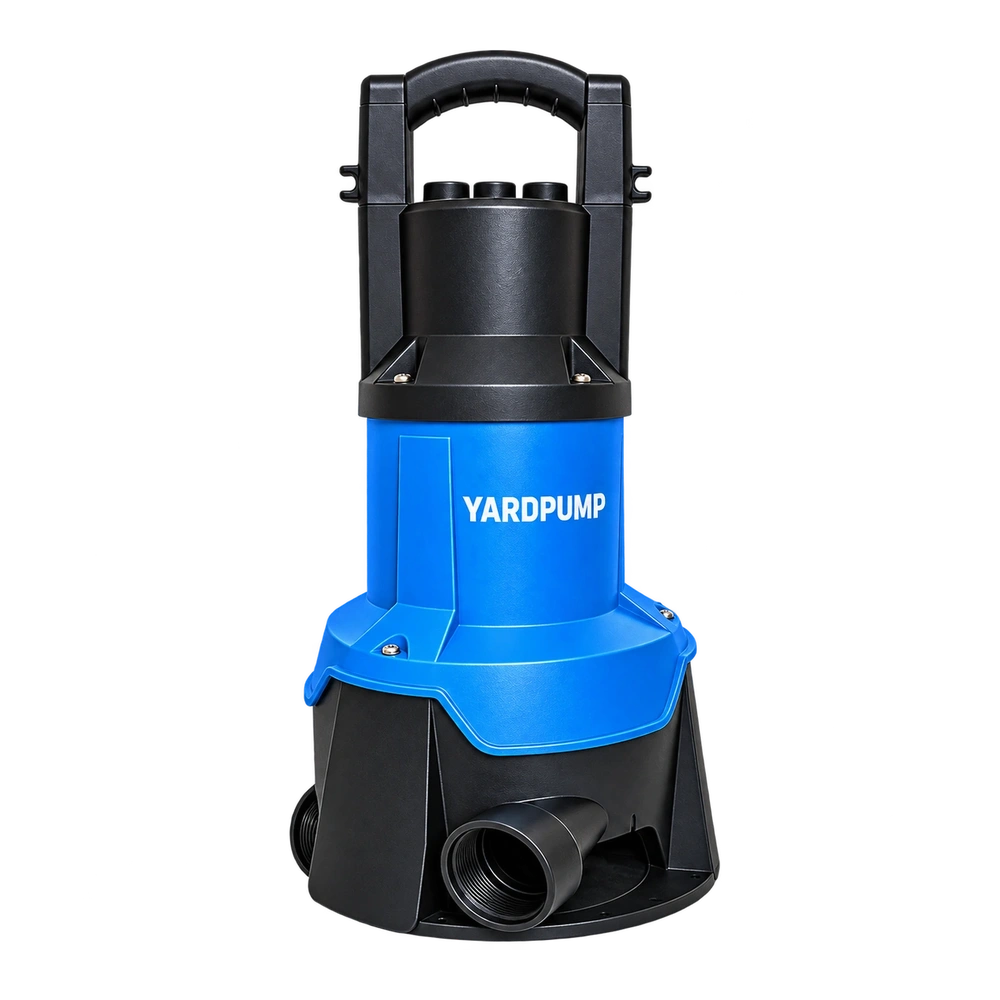
Short answer. No. A successful water-ingress test shows that the tested assembly resisted water under the specified conditions. It does not, by itself, establish that a pull or twist on the external power cord cannot reach internal terminals or disturb the seal. Cord anchorage and water sealing protect against related but different failure modes, so an OEM buyer should verify both against the requirements applicable to the exact pump and market.
A plastic submersible pump may look perfect after an immersion test. The cable gland is dry inside, insulation measurements are satisfactory, and the motor runs. Months later a returned unit shows a shifted cable jacket or a loose internal connection. Was the seal defective? Was the cord used to lift the pump? Did a cable-supplier change alter jacket diameter or friction? A single leak test cannot answer those questions.
Two functions share the same small opening
At the cable entry, the construction must keep water out while preventing external mechanical loads from damaging internal electrical connections. Depending on the design, a compression gland, moulded strain relief, clamp, grommet, potting system or separate internal anchorage may contribute. A component that compresses the jacket for sealing is not automatically adequate as a mechanical cord anchor; equally, a strong clamp may not be watertight.
Consider four distinct checks:
| Check | Main question | Why a pass is not enough on its own |
|---|---|---|
| Water ingress / immersion | Does the tested entry resist water at the specified depth, time and conditions? | It may not simulate cord pull or twisting |
| Cord pull / anchorage | Does external tension move the cord or stress terminals and the seal? | It does not establish long-term water resistance |
| Twist / rotation | Can torque damage the jacket, connection or entry assembly? | It may miss axial movement or pressure effects |
| Electrical integrity | Are insulation and protective connections intact after the relevant tests? | Good readings do not prove mechanical retention |
The correct test sequence matters. If a cable entry is pulled or twisted and then immersed, the result can reveal damage that an as-built immersion test misses. The sequence, loads, duration, acceptance criteria and sample conditioning must come from the applicable product standard and the approved test plan, not from a convenient universal number.
How a cable change can alter the result
Two cords may both be sold as the same nominal conductor size while differing in outer diameter, jacket hardness, surface finish, ovality or thermal behaviour. A softer or thinner jacket may compress differently under a gland. A stiffer jacket can transmit bending forces differently. A different cord shape can change how an internal clamp grips it. The motor may still run and a short immersion test may still pass, yet the margin against cable movement may have changed.
This is why a buyer should control more than the printed conductor cross-section. The approved BOM should identify the cable construction, outer dimensions and tolerances, jacket compound or specification, gland parts, clamp geometry, tightening process and any potting or curing steps. Where a supplier proposes an alternative, require an engineering-change assessment before approving production.
Test the assembled product, not a loose gland in isolation
A loose cable gland can pass a supplier's component test while failing after assembly into a plastic housing with a different wall thickness, screw torque or moulding tolerance. The final acceptance unit should represent the production configuration, including the actual cord, housing, fasteners, seals and internal terminals. If there are several cable diameters or plug versions, agree which variants represent the worst credible conditions and which require separate tests.
A practical sequence is to record the as-built cable position and dimensions, inspect the entry, apply the prescribed mechanical tests, then check for unacceptable displacement, terminal strain, insulation damage and seal deterioration. Follow with any required electrical and water-ingress checks. Photograph the cable position before and after testing, and record sample IDs and lot information. Do not use a damaged test specimen as saleable stock.
Do not confuse product testing with lifting instructions
A cord-anchorage requirement does not give permission to lift or suspend the pump by its power cable. Portable submersible pumps should be moved using the approved handle or lifting arrangement, with power isolated. A user lifting a pump by the cord can impose forces and repeated bending outside normal operation. A buyer should verify that manuals, carton illustrations and sales photographs do not suggest unsafe handling.
For quality teams, a useful failure investigation separates a manufacturing defect from misuse without assuming either one. Inspect jacket marks, clamp position, conductor termination, entry deformation, water traces and any evidence of repeated bending. If an internal connection has overheated, do not re-energise the unit merely to reproduce the fault; use an appropriately controlled laboratory procedure.
What to include in an OEM release record
The release package should state the destination-market electrical version, applicable standard and edition, cable supplier and revision, entry and anchorage drawings, assembly process, test specimen IDs, prescribed mechanical loads and sequences, ingress and electrical results, and the approval authority. Any change in cord, gland, housing, clamp or potting process should trigger a documented impact review. A simple “IP68 passed” line is not a complete cable-entry validation report.
The objective is not to maximise pull force for marketing. It is to establish that the specified construction meets its applicable safety and performance requirements without damaging the seal or internal wiring. The YARDPUMP Technical Guides provide further context for pump materials, motors and acceptance testing.
Questions quality teams ask
Does an IP68 rating prove that a pump's power cable cannot be pulled loose?
No. Ingress protection and mechanical anchorage are different properties; each needs the applicable test evidence.
Can a different cable brand be approved if the conductor size is unchanged?
Not automatically. Jacket dimensions, material and interaction with the gland and clamp can change. Assess and test the actual assembled variant.
Should the pull test happen before or after immersion?
Use the sequence specified by the applicable standard and validation plan. Where damage from mechanical loading could affect sealing, the plan should assess that interaction rather than testing each property only in isolation.
Can a distributor describe a pump as “safe to lift by its cord” after a strong anchorage test?
No. Cord anchorage does not replace the approved lifting method or the product's operating instructions.