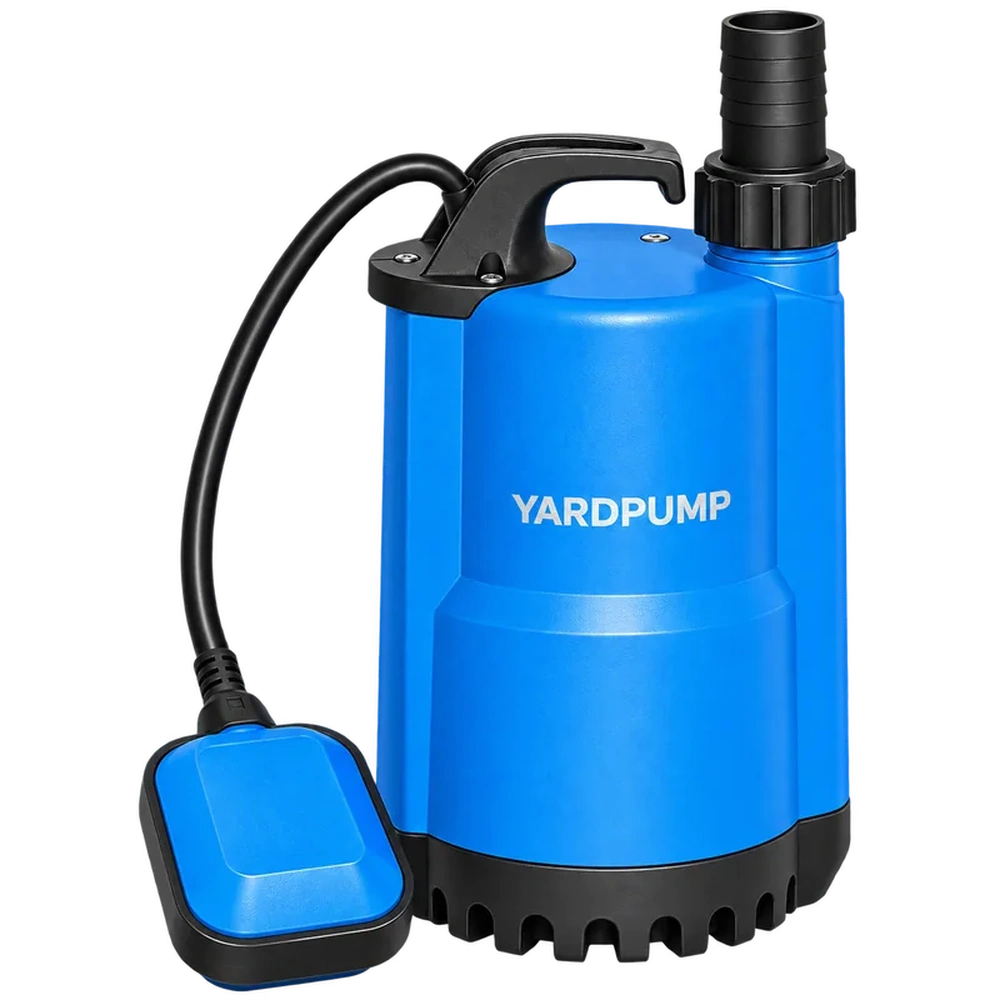
A pump that operates continuously in 20°C water may reach thermal protection sooner in warm water, low level or partial exposure. Motor losses become heat that must pass through the housing to the surrounding liquid. Higher liquid temperature, reduced wetted area and poor circulation shrink the temperature difference available for cooling, so the equilibrium temperature rises.
What drives the result
Winding current and resistance create copper loss, while core, bearings and seals add heat. Final temperature is the balance between generation and rejection. Warmer water reduces the housing-to-liquid gradient. A partly exposed housing has a different heat-transfer path on its air side. Temperature also changes winding resistance, lubricant behaviour and elastomer properties. A thermal protector limits some consequences; it does not approve operation outside the rated envelope.
An illustrative way to check
A useful comparison fixes voltage, frequency, hydraulic duty, starting water temperature, water volume, immersion level and duration, then records water temperature, ambient, input power and protective operation. A video showing that a pump still turns in hot water does not establish a rating. If test water continues heating, separate pump contribution from external heating.
A sound investigation of submersible pump hot water thermal margin separates hydraulic, motor, structural and installation observations before connecting them. Replacing the first damaged part may restore operation temporarily while leaving the initiating cause untouched. Start with safe isolation and stated operating limits, preserve the original condition, examine the installation and liquid, and only then dismantle internal components. Comparison units must use the same voltage, frequency, piping, water level and running time; otherwise differences in current, temperature or sound have little diagnostic value.
Actions for the site or purchasing team
- Confirm permitted liquid temperature, minimum level, continuous or intermittent regime and cooling method in the exact documentation.
- Build a worst-case test matrix inside the design boundary rather than using abusive conditions as a marketing claim.
- At a fixed duty, log input power, current, water temperature and relevant housing temperatures over time.
- Investigate protective operation instead of repeatedly allowing automatic reset to heat the sample again.
- Revalidate thermal balance after changing motor, impeller or housing.
Limits and application boundary
Testing electrical equipment in hot water requires suitable laboratory controls. No maximum liquid temperature is asserted here for a YARDPUMP model.
Frequently asked questions
Does thermal protection permit hotter water? No. Protection does not extend the rated liquid-temperature limit.
Does partial exposure matter? It can, depending on cooling design and level; validate the model boundary.
Can no-load current predict temperature rise? No. Hydraulic load and heat-transfer conditions both matter.
Related reading
A Pump Stops, Cools and Restarts: How to Build a Useful Fault Record
Submersible Pump Stops and Restarts? Thermal Protection Is Not Dry-Run Permission