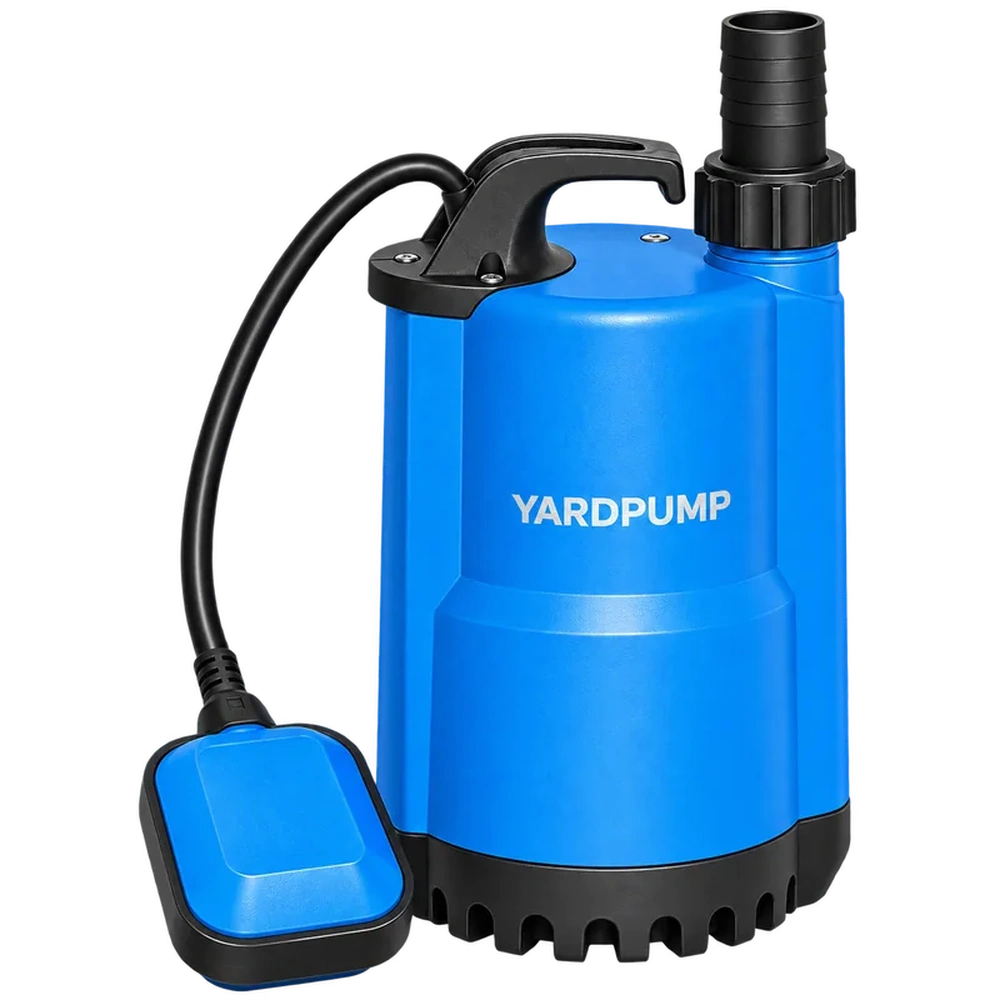
A single phase submersible pump is discharging steadily on a test bench. The buyer reads active power at the supply, but the factory report gives a smaller figure. Both readings can make sense if they cover different parts of the same circuit. The cable and connections between the meters can use some of the power. Draw the measurement boundary first, then check what was running at the same time and how much wiring loss is plausible. Neither reading can settle a nameplate dispute on its own.
Find out where the report means by “pump side”
Draw the supply, the lead and connections between the two measurement points, and the unit being accepted. A portable clean water pump shipped with a factory plug might have its acceptance point at that plug. In that case the attached factory cord sits inside the delivery boundary, and a bench extension sits outside. If the other reading comes from a control panel, find out whether that panel also serves another device. A shared load can make the supply figure higher without telling you anything about the pump cable.
The quantity you want here is active power in watts. Multiplying AC volts and amps yields apparent power; multiplying those readings at two points does not replace active power measurements at the same time. Label the P1 measurement point, say whether it includes the factory cord, and describe how the meters were connected. If the rating being checked is P2, mechanical output at the shaft, neither electrical reading is a direct comparison.
How much difference could a long lead explain?
In this hypothetical example the round trip conductor resistance between the points is 1.5 Ω and the RMS current is 4 A at a stable duty point. Estimated resistive loss is 4² × 1.5 = 24 W. Suppose the pump draws 300 W within its agreed delivery boundary. With no other loads between the points and meter error ignored, the upstream reading would be about 324 W. The 1.5 Ω already covers the outgoing and return conductors; don't double it. These numbers illustrate where the power goes. They are not a model rating, a safe cable length, or a rejection threshold.
This calculation cannot reconcile two tests run one after the other. Changing a lead can change the voltage delivered to the pump. Motor speed and the hydraulic duty point may change as well. Cable resistance also changes as the conductors warm. When the difference is comparable to combined meter uncertainty and operating variation, record that the test cannot distinguish the two effects. That is more useful than labelling the lead defective.
What should the inspector keep when the readings disagree?
Add a simple wiring diagram showing the delivered unit, both meter locations and any controller branch. For the same stable interval, record actual pump side voltage, frequency, RMS current, active power, flow and corresponding head. Include the factory and bench lead lengths, intervening connectors, instrument ranges and reading stability. Qualified personnel should use suitable instruments on a controlled bench, isolating the supply and verifying it is deenergized before altering wiring, inspecting connections or fitting instruments. A customer does not need to take readings at a wet socket, cable joint or open pump.
If the report already exists, ask for the original measurement locations and record. Use the approved bench arrangement to separate auxiliary loads where the supply served more than the pump. If all that survives is two photographs from different days, arrange a witnessed retest on one delivery configuration and one hydraulic circuit. Specify the factory plug as the acceptance point for the retail version where appropriate; define the agreed termination for a bare lead OEM variant.
Decide which result to use
If a verified wiring loss explains the difference and the pump meets the agreed criteria at its boundary, keep both readings with their meanings. If the numbers still don't reconcile, look for shared loads, unsynchronized readings, meter settings or connection losses and repeat the specified test. Escalate a product deviation only if repeatable measurements at the delivery boundary conflict with the acceptance rule. If the job is estimating the cost to run the entire drainage system, the upstream figure is useful in its own right. Report it separately.
Frequently asked questions
Does coiling an extension lead change the measurement boundary?
No. The lead still sits inside or outside the boundary. Follow the equipment instructions and electrical requirements for routing; a qualified person should assess heating or installation changes. The worked loss is not a safety limit.
Is roughly the same current proof the pump draws the same watts?
No. Voltage and power factor can differ. Use active power readings at the specified duty and confirm whether both measurements came from the same circuit.
Is a photograph of the supply meter useful?
Keep its time, the pump identity and any other equipment running at the time. It can guide the investigation, but cannot establish pump-only input without the electrical boundary and hydraulic conditions.