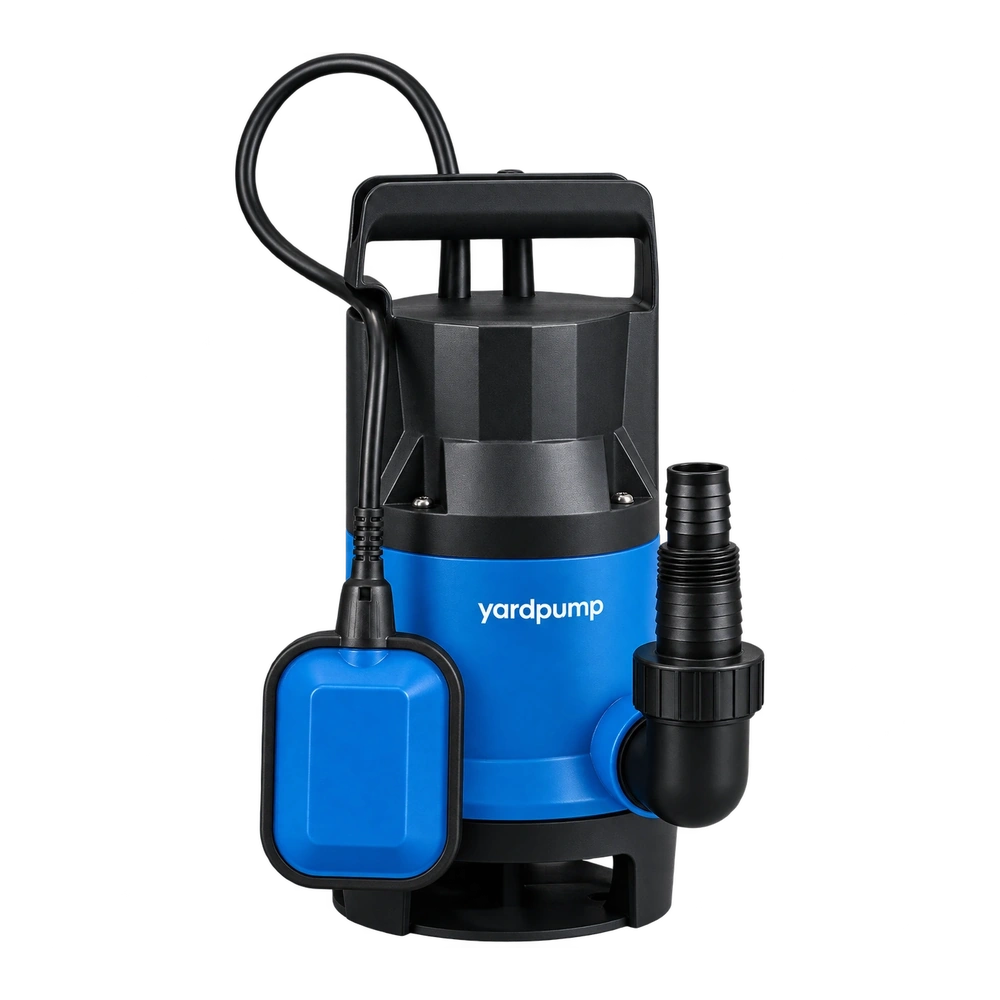
A small submersible pump is clearing shallow water. The hose keeps delivering, yet a thin stream also shoots from a hole on the side of the pump body. Some models have a factory vent in the wet end that passes a little water during operation. Water from a seam, a crack or a cable entry is different. Find where the stream first leaves the equipment from a safe place and check the instructions for the exact model. Continued discharge does not clear the pump of a housing or electrical problem, and plugging a hole is not a useful test.
Why can an air vent pass water?
Air trapped in the wet end of some submersible pumps can keep the impeller from sending water through the discharge. A designed vent provides an escape path. After water fills the wet end, some can also pass through that path. At one water level the stream may be hidden. When the same opening is exposed later, the stream becomes conspicuous. When its location and behavior match the manufacturer's instructions, a small stream does not by itself mean that a seal failed. Other designs vent internally, use a different arrangement, or have no visible body hole. Do not use another pump as the model for yours.
A hose connection can also leak down the outside of the body. Water that leaves at an edge farther down can look like a jet from the housing. If it is safe to observe without reaching down, take a video that shows the fitting, housing and apparent source together. Before approaching, cleaning or changing anything, isolate power from a dry, safe place and prevent automatic restart. If floodwater makes the electrical equipment or access unsafe, leave it to qualified personnel. Do not hold the running pump to locate the stream or take off a guard to expose the opening.
Make the service decision from three observations
First, check whether the exact model instructions, an approved drawing or the manufacturer's response identifies an opening of that shape and location relative to the discharge. A round hole by itself is not proof. Second, look for impact marks, pry marks, cracks or water emerging from a seam or cable entry. Isolate the unit for authorized inspection if any of those signs appear, if a protective device has operated, or if a cable is damaged. Third, check actual delivery at the outlet without judging the height of the small jet. Use the water level, hose routing and outlet flow recorded under approved operating conditions. Do not run a unit suspected of damage to gather more data.
When the instructions confirm the opening, delivery is normal and no warning signs are present, monitor it in ordinary use. If the source remains uncertain, the behavior has changed, or delivery has fallen substantially even though the location matches the drawing, ask for service. A hose restriction, an intake problem or unrelated damage may be involved. The presence of water in the opening alone cannot distinguish them.
Use a delivery record instead of estimating by eye
For illustration, suppose a 20 L container fills in 60 seconds at a safe discharge location. That represents 20 L/min at the outlet. If the same pump with matched water level, fittings and hose routing now takes 120 seconds to fill the same volume, it delivers about 10 L/min. This shows that outlet flow was halved. It does not mean the missing 10 L/min went through the small opening. Give the service provider the two observations with the water levels, hose conditions and photos of the stream. If the conditions differ, check them before comparing the results. These figures are not a performance criterion.
These checks cover what can be observed externally on small clean-water drainage pumps. Do not open a sealed motor. Follow the instructions for the specific model if its vent needs maintenance, and do not plug, enlarge or drill a vent.
Frequently asked questions
Why is the stream only visible after the water level drops?
An original opening can become visible when the water no longer covers it. Stop and verify if there is new damage, flow at a seam or a source you cannot identify.
Can I tape over the hole to see whether outlet flow improves?
Do not use blockage as a test. Blocking a vent can prevent the pump from clearing air. Check the model documentation and the condition of actual delivery.
Is it still worth checking the hose fitting if the stream seems to come from the body?
Yes. A fitting leak can track down the outside and emerge lower down. Capture both the source and the fitting to distinguish the two paths.