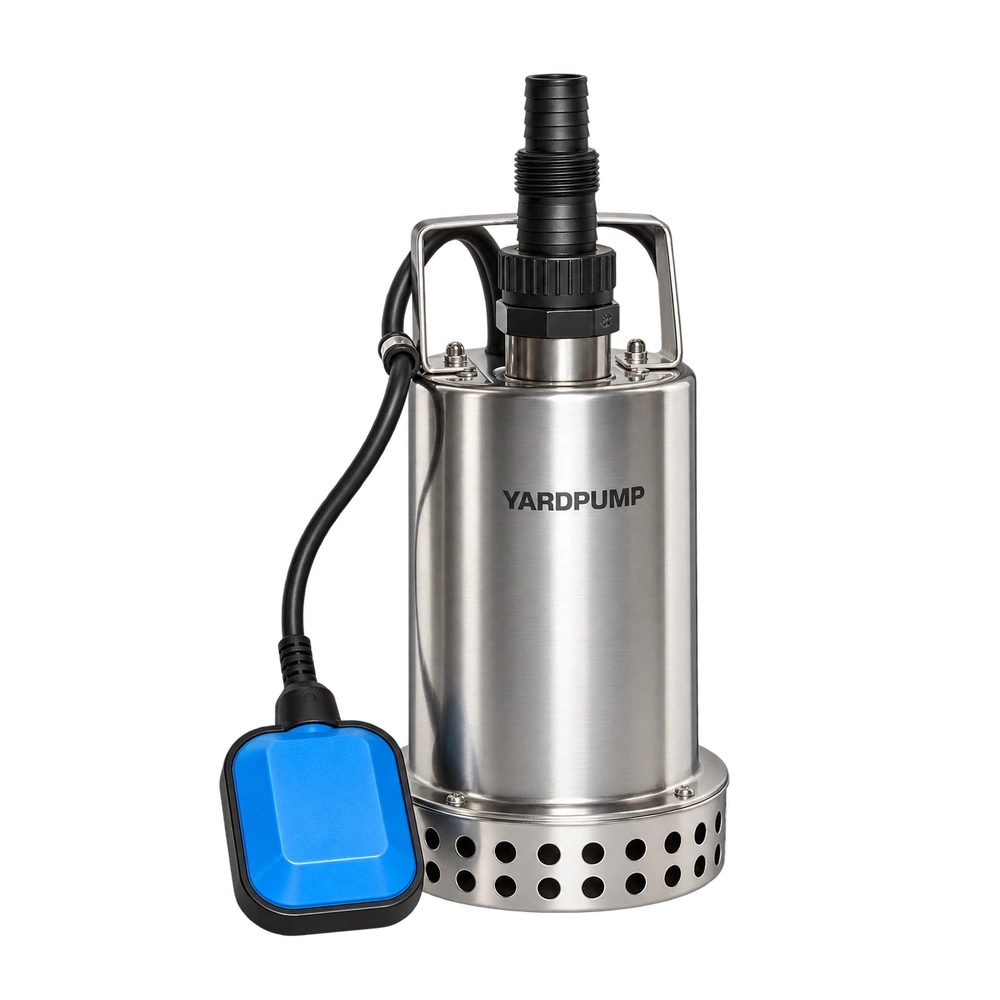
An importer sees “230/400 V, Δ/Y” on a three-phase pump motor and assumes it can use a star–delta starter on a 400 V supply. That assumption can damage the motor.
The marking normally identifies corresponding delta and star running voltages. It does not mean both connections are interchangeable on the same 400 V supply. Qualified electrical personnel must confirm the winding rating, final running connection, available leads and approved starting arrangement.
Separate supply voltage from winding voltage
For the common symmetrical three-phase arrangements discussed here, each winding sees the line voltage in delta. In star, it sees approximately line voltage divided by the square root of three.
On a 400 V supply, that is approximately 231 V per winding in star, but 400 V in delta. A small change in connection symbol can therefore represent a substantial change in winding voltage.
A motor explicitly marked 230/400 V with corresponding Δ/Y symbols commonly runs in delta at 230 V or star at 400 V. Switching it to delta on 400 V no longer supplies the winding with its approximately 230 V rated condition. Successful rotation does not prove that connection is correct.
Dual voltage is not permission for star–delta starting
A conventional star–delta starter begins in star and then changes to delta for normal operation. On a 400 V supply, the motor’s delta running rating must match that supply.
A common 400/690 V Δ/Y motor has the corresponding voltage relationship, but that is only one requirement, not complete approval.
| Example marking | Common running connection on 400 V | What cannot be assumed |
|---|---|---|
| 230/400 V, Δ/Y | Star | Delta is permissible on the same supply |
| 400/690 V, Δ/Y | Delta | Every load suits star–delta starting |
| Fixed connection or limited leads | Follow the specific manufacturer’s arrangement | Six terminals can be created informally |
| Other winding design | Individual assessment | The examples apply automatically |
The table concerns clearly identified common constructions. It does not cover every dual-voltage, two-speed or special winding. If symbols, order or identity are unclear, obtain confirmation rather than guessing.
Why the voltage relationship is insufficient
The motor needs appropriate accessible leads and a permitted switching arrangement. Available starting torque must suit the pump load, and switching and protection must be coordinated.
Some submersible motors have fixed internal connections. Three external phase conductors do not authorise opening a sealed motor to create another configuration.
Reduced voltage during the star stage also affects starting torque. Lower current does not establish that the pump will accelerate satisfactorily. Timer settings, contactor coordination and protection belong to competent design and commissioning, not repeated trial connections.
This guide provides no terminal-bridging instructions, control-panel wiring procedure or live-measurement steps.
Exchange the right information before ordering
The buyer should provide line voltage, frequency, supply arrangement, proposed starter or drive, pump duty and cable configuration. The supplier should confirm the exact motor plate, connections, available leads and approved starting method.
“400 V three-phase” alone can still leave incompatible requirements unresolved.
With a variable-frequency drive, assess its actual output voltage, control and motor compatibility rather than relying solely on input-supply voltage. Changing connections also does not replace verification of a 50 Hz or 60 Hz version.
Keep the evidence linked to the particular configuration. The examples do not establish that every YARDPUMP model has a particular three-phase construction.
Inspect and release safely
Qualified personnel should isolate supplies, confirm the safe state and manage stored energy before checking plates, drawings, leads and controls. Physical inspection and running tests must follow an approved procedure. End users should not open the motor and experiment with alternative connections.
If a motor has already operated under an unsuitable connection, a later apparently normal run does not rule out damage. Assess windings, insulation and other affected parts and complete the required checks.
Retain the incident and final configuration records. A lower current after correction is not a reason to erase the history. Linking the approved motor and starter arrangement helps prevent the same mistake when a replacement motor or panel is ordered.
Frequently asked questions
Do two nameplate voltages guarantee star–delta starting?
No. Confirm the matching symbols, final voltage, leads, load and control arrangement.
Is any existing 400 V starter suitable for a 400/690 V motor?
Not automatically. Voltage is only part of the assessment; torque, switching and protection still matter.
Can this table be used to reconnect a single-phase pump?
No. It concerns specified common three-phase arrangements, not capacitor-operated single-phase motors.