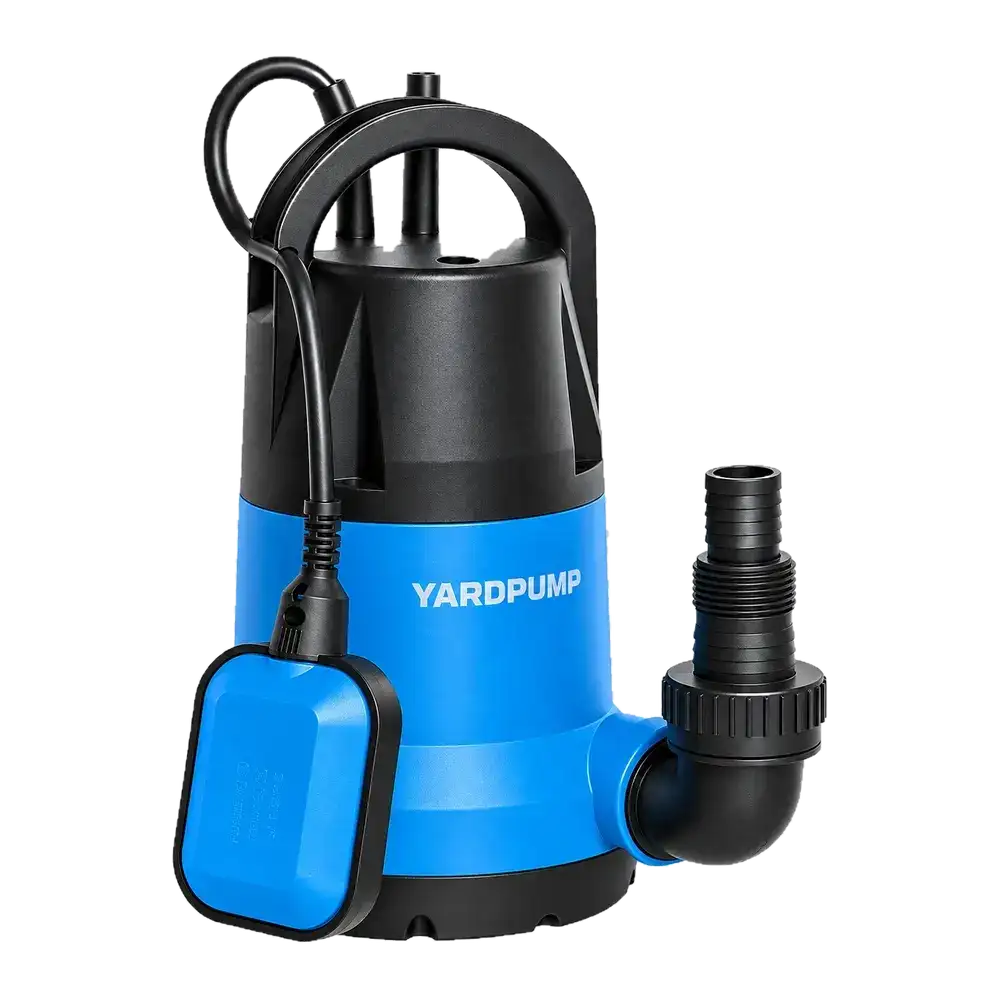
A customer assumes a three-phase pump will stop immediately after losing a supply phase because its motor is described as thermally protected. That assumption needs checking. Temperature protection, overload protection, phase monitoring and short-circuit protection are different functions with different operating conditions. Confirm the particular three-phase version and control system rather than treating one protection label as a promise covering every fault.
Starting and running behaviour can differ
Loss of one phase changes the electrical conditions of a three-phase motor. A stationary motor may fail to start normally, while a running motor may continue rotating under abnormal conditions and overheat. The response depends on the load, connections and protection arrangement. Continued rotation does not establish a healthy supply, and waiting until the casing feels hot is not an appropriate detection method.
This discussion applies to relevant three-phase motors and installations. It does not imply that every small submersible pump or YARDPUMP model is three-phase. A single-phase capacitor motor with a starting problem needs an investigation appropriate to that construction. Transferring a three-phase phase-loss explanation to it can send the service team down the wrong path.
Identify the actual protective functions
An embedded temperature device responds to conditions at its sensing location. Its name alone does not establish response time or complete phase-loss coverage. A three-pole overload relay may have particular phase-failure sensitivity, but the actual model, settings and documented behaviour matter. A separate phase monitor also has a defined monitoring location, detection logic and output action; it does not eliminate every possible motor thermal risk.
Short-circuit and residual-current protection cannot stand in for these functions. The motor, contactor, conductors and protective devices need a coordinated arrangement. Counting devices inside a panel is not enough. If a device provides an alarm, confirm how that output produces the intended shutdown or interlock rather than assuming the indication itself protects the motor.
| Function | Typical condition addressed | Unsafe assumption |
|---|---|---|
| Temperature protection | Temperature at the relevant sensing location | Every phase-loss event causes an immediate trip |
| Overload protection | Defined overload behaviour and related response | Every relay has identical phase-loss sensitivity |
| Phase monitoring | Specified phase conditions at its monitoring point | All downstream faults are detected |
| Short-circuit or residual-current protection | Its corresponding fault category | It replaces motor overload and phase-loss protection |
Monitoring location defines visibility
A monitor upstream of a contactor may not see exactly the same conditions as the motor after a downstream connection, contact or cable fault. This is not an instruction to relocate wiring casually. It is a design question about monitoring scope, fault scenarios and interlock behaviour that competent personnel must assess and verify.
Consider a clearly hypothetical case in which three phases are present at the incoming panel terminals but a downstream connection is faulty. A healthy incoming indication cannot establish healthy motor-terminal conditions. This is not a reported customer incident or a live-measurement procedure. It illustrates why the system boundary belongs in the protection assessment.
Separate information gathering from electrical investigation
Stop operation, isolate the supply and preserve alarms, trip sequence and timing. A distributor can collect nameplate information, panel identity, connection documents, recent repair history and load changes. Repeatedly restarting to see whether the motor survives is not a useful diagnostic method. Account for automatic reset and remote commands that could cause unexpected starting.
Qualified personnel should examine the supply, contactor, connections, cable and motor through applicable safe procedures. Do not pull a fuse to manufacture phase loss, bridge an interlock, increase a protective setting to force operation or disconnect protective earth for diagnosis. Any work requiring energized investigation needs the professional controls and facilities appropriate to that task.
Verify the complete action chain
Procurement should state the three-phase electrical version, required functions, device identities, setting basis, monitoring locations and reset conditions. Acceptance needs more than label inspection. An approved safe verification method should establish that detection, outputs, interlocks, contactor action and reset logic deliver the intended behaviour.
After a trip, establish and record the cause before resetting. Automatic reset is not inherently appropriate for every drainage application. Unattended operation, repeated starting and unexpected movement need consideration. Effective protection is a verified chain of functions connected to the installation, rather than a general statement that the motor contains thermal protection.
Frequently asked questions
Does continued rotation rule out phase loss?
No. A running three-phase motor may continue under abnormal supply conditions. Have qualified personnel investigate safely.
Does residual-current protection remove the need for overload or phase-loss protection?
No. These functions address different fault conditions and need coordination for the motor and installation.
Can a user deliberately remove one phase to test protection?
Do not improvise that test. Competent personnel should verify the function through an approved safe method that controls damage and exposure risks.