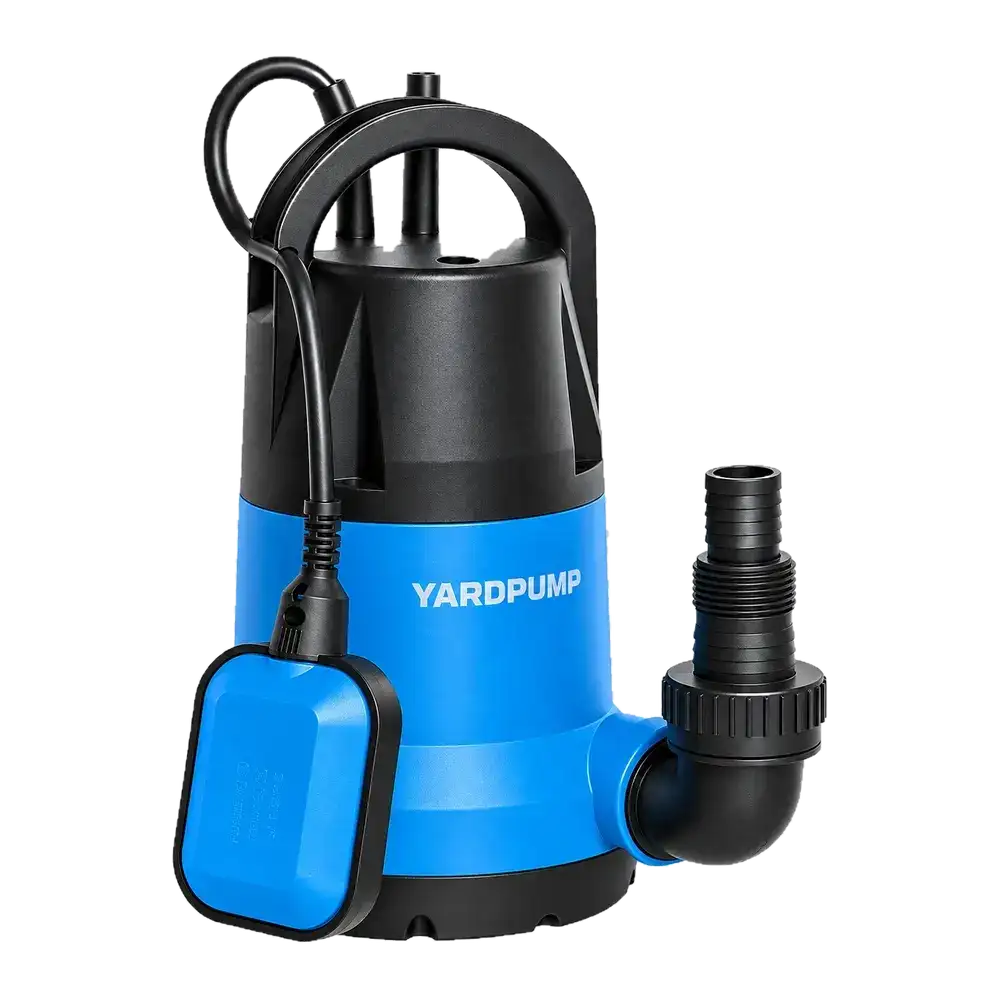
After a three-phase drainage pump is moved to another supply point, it still delivers water but produces much less flow and head. Do not rule out reverse rotation merely because some water appears. A centrifugal pump can move water in the wrong direction of rotation, while its impeller and casing no longer work as designed. Have competent personnel confirm the specified rotation before continuing the investigation.
The hydraulic assembly is directional
Impeller passages, blade outlets and the casing work together to transfer energy. Reverse operation may stir and discharge some water, but its performance is not the approved curve.
The reduction depends on the design. A statement such as “reverse flow is always half” is not a reliable diagnostic rule. Current is not a universal direction indicator either. Some reverse conditions impose a lighter load; others produce abnormal hydraulics, vibration or mechanical effects.
A reading below nameplate current does not establish correct rotation. Conversely, poor flow has other possible causes, including air entry, valve position, restrictions and supply problems. Rotation is a specific check within a wider diagnosis.
Identify changes in the supply path
A different supply point, replaced connection equipment or rewiring after repair makes phase sequence worth checking early. A successful factory test does not establish the phase sequence of a newly assembled site supply path.
Record what changed immediately before the symptom. That history often narrows the investigation more effectively than repeatedly substituting another pump into the same installation.
Supply phase sequence and actual motor direction are related but not identical evidence. Internal connections and the manufacturer's direction-check procedure still matter. In some arrangements, starting reaction is opposite to shaft rotation; confusing them can produce the wrong conclusion. Do not hold an energised pump to judge its kick.
Use a controlled direction check
First isolate the supply and prevent automatic restart. Competent personnel should assess wiring and the appropriate checking method. Any prescribed short test must follow the particular equipment's instructions, cooling requirements, guarding and test procedure.
Do not run a submersible pump dry for an extended period simply to observe its impeller. Do not ask users to exchange wires themselves, change connections while live, bypass protection or enter water to inspect operation.
Where correction is required, qualified personnel should complete it and recheck electrical safety, direction and hydraulic duty. Phase protection, soft starters and variable-frequency drives can alter the relevant procedure, so a generic wire-swapping instruction is not a complete solution.
Consider consequences of reverse operation
Depending on construction, wrong rotation can affect threaded connections, impeller retention or other mechanical parts. The need for inspection depends on the actual design and operating history.
Abnormal noise, vibration or signs of looseness warrant stopping and examination. Correcting the direction does not automatically prove that no secondary effect occurred. Equally, it is inappropriate to claim that a brief reverse event necessarily destroyed every pump.
For acceptance after correction, compare flow, head, real input power and three-phase currents with the same water level, hose and valve conditions. If performance remains inadequate, continue through the water path and mechanical condition rather than treating phase sequence as the only possible explanation.
Keep the commercial conclusion proportionate
A site connection change can make an otherwise capable pump deliver poorly. Establishing that mechanism prevents an installation fault from becoming an unsupported allegation about the performance label. It also avoids replacing the pump while leaving the electrical cause in place.
Compare stable delivery rather than one startup image. A baseline record at the same level and pipe arrangement helps show the change. Do not adjust a valve merely to recover a familiar flow before investigating, because it can conceal the symptom. Pass any design-specific rotation or impeller-retention requirements to the inspecting personnel instead of applying experience from another model.
Questions about rotation
Can a single-phase capacitor pump be reversed by swapping two supply wires?
Do not apply a three-phase procedure. Its winding and connection arrangement differs and requires manufacturer guidance and competent personnel.
Does a normal phase-sequence reading prove correct pump rotation?
No. Confirm equipment connections and the specified actual direction as well.
Is a few seconds of reverse running always harmless?
There is no universal safe-time promise. Stop using the appropriate safety procedure and assess the particular design and event.