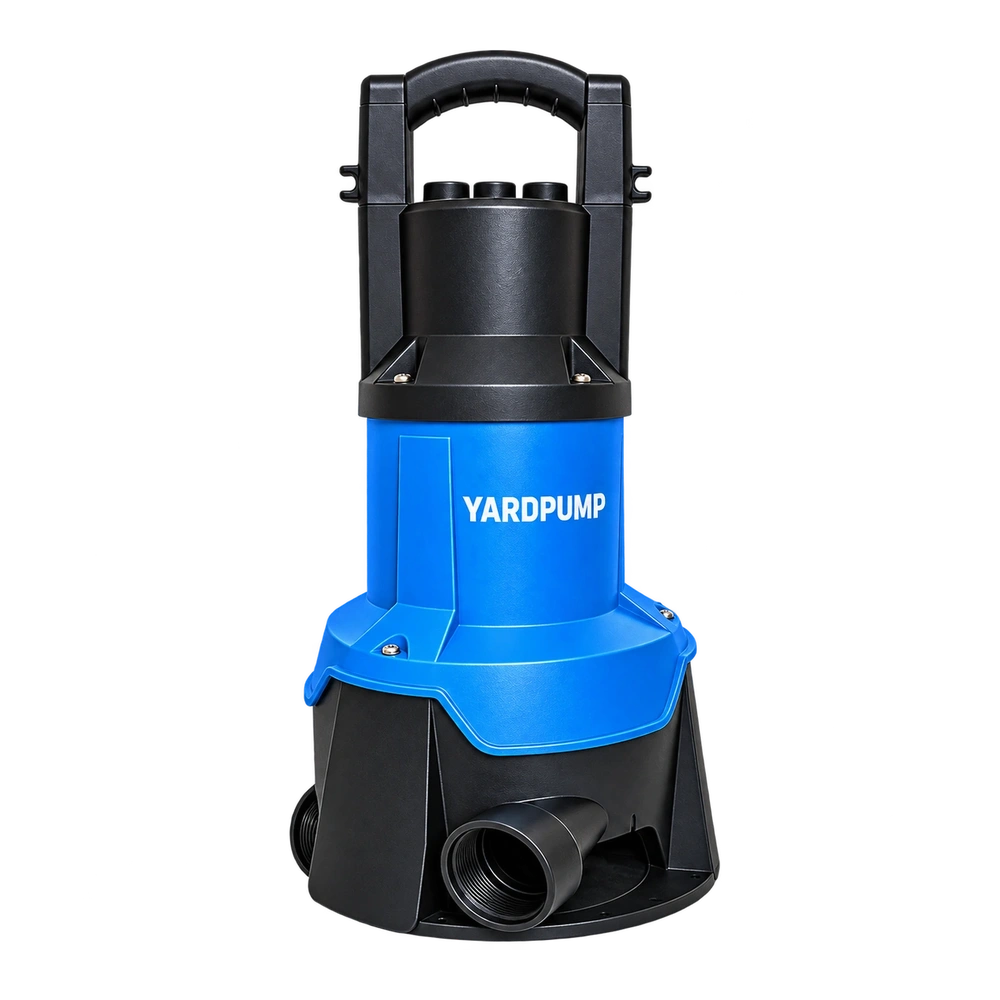
Two pump offers both specify 50 Hz. One runs near 1,400 rpm and the other near 2,800 rpm. Is the slower motor struggling? First check the pole count. A conventional induction motor with four poles has a different synchronous-speed range from a two-pole motor. Comparing different pole counts as though they were the same motor can turn a normal design choice into a false fault diagnosis.
Identify the motor before interpreting the speed
This explanation concerns induction motors operating at the relevant supply frequency. Permanent-magnet motors, electronically controlled pumps and other drive arrangements require their own interpretation. Establish the motor type, nameplate, wiring information, frequency, pole count and measurement method first.
Synchronous speed in revolutions per minute equals 120 multiplied by frequency, divided by the number of poles. At 50 Hz, two poles give 3,000 rpm and four poles give 1,500 rpm. At 60 Hz, the corresponding values are 3,600 and 1,800 rpm. An induction motor delivering torque normally runs below synchronous speed; the difference is slip.
| Supply and poles | Synchronous speed | Additional check |
|---|---|---|
| 50 Hz, two poles | 3,000 rpm | Rated loaded speed and actual duty |
| 50 Hz, four poles | 1,500 rpm | Rated loaded speed and actual duty |
| 60 Hz, two poles | 3,600 rpm | Correct frequency version and pump load |
| 60 Hz, four poles | 1,800 rpm | Correct frequency version and pump load |
These figures describe the rotating magnetic field. They are not acceptance values that every loaded pump should achieve.
Half the speed does not mean half the efficiency
A slower four-pole motor may simply serve a different design requirement. Shaft power depends on both torque and rotational speed. At equal shaft power, a lower-speed shaft must transmit more torque. Speed alone therefore cannot establish electrical efficiency, input power or manufacturing quality.
For a hypothetical comparison, suppose both designs must provide 0.5 kW of shaft output. One operates at 2,800 rpm and the other at 1,400 rpm. The slower design needs approximately twice the torque under the mechanical power relationship. This illustrates the relationship, rather than predicting the performance of two real pumps.
Likewise, a lower speed does not automatically prove longer life. Bearing loads, lubrication, seals, hydraulic forces and operating conditions still matter. Compare the complete design at its intended task.
The hydraulic assembly must match
Replacing a four-pole motor with a two-pole motor makes the original impeller turn faster, but does not create a validated higher-output pump. Flow, head, shaft demand, vibration and pressure boundaries may all change. Affinity relationships can support an initial estimate only where their assumptions apply; they do not replace testing of the final assembly.
Changing in the other direction can also fail the application. An impeller originally intended for the higher speed may no longer overcome the system's static head. A pump that spins smoothly but cannot deliver at the required elevation has not solved the buyer's problem.
When a particular flow and head are required, compare complete, appropriately designed alternatives. Avoid treating a motor substitution as an isolated purchasing shortcut.
Make the quotation and acceptance comparable
Specify the supply, duty point, liquid, running pattern and installation space. Ask for the curve, power definition and rated speed of the actual offered version. Pole count belongs in the configuration record; “higher speed is better” and “lower speed is more durable” do not belong in an acceptance rule.
During a controlled test, record actual frequency, speed, flow, total head and real input power. Electrical measurements require qualified personnel and appropriate protection. Confirm that the tachometer is not counting multiple reflective features or an unrelated signal.
Only after establishing the same pole count, supply and operating conditions should an unexpected speed difference prompt investigation of voltage, mechanical resistance, rotor condition or winding configuration. A short video without that context cannot establish nonconformity. Model-specific approved information remains the authority; these principles do not assign one speed to every YARDPUMP pump.
Frequently asked questions
Can an ordinary motor switch between two and four poles by reconnecting it?
Do not assume so. Pole-changing capability requires a specifically documented design.
Is a four-pole pump necessarily quieter?
No. Hydraulics, bearings, mounting and surrounding structures also affect sound. Compare under equivalent conditions.
Does measuring the expected 1,400 rpm prove pump performance?
No. Speed is one check. The required flow, head, power and remaining acceptance conditions still need verification.