Short answer. Not necessarily. A two-pole induction motor supplied at 50 Hz has a synchronous magnetic-field speed of 3,000 rpm, not a guaranteed shaft speed of 3,000 rpm. The rotor must run slightly slower to develop torque. If its measured shaft speed is 2,850 rpm, the slip is (3,000 − 2,850) / 3,000 = 5.0%. Whether that is acceptable depends on the motor design, declared rating, actual pump load, supply conditions and temperature—not on the speed number alone.
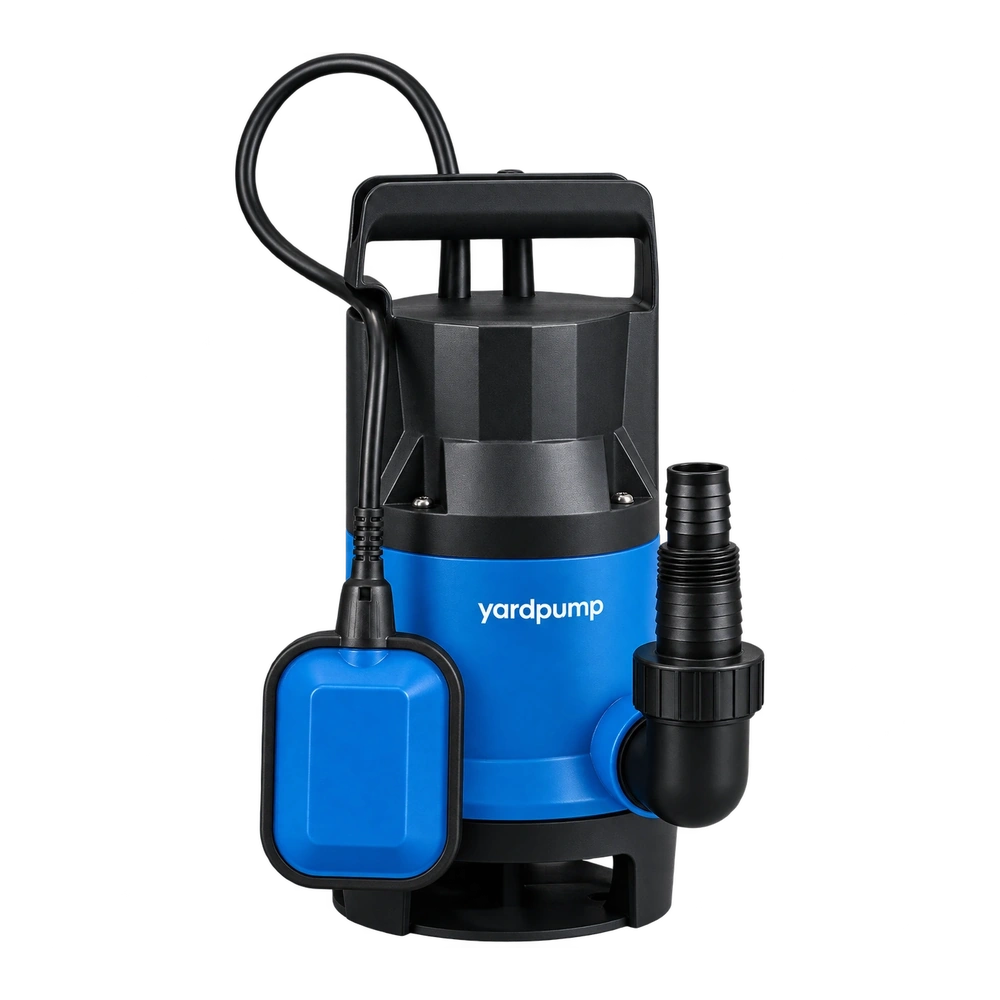
An OEM buyer sees 2,850 rpm on a compact submersible-pump test sheet and asks whether the motor should have been “3,000 rpm”. The two figures describe different things. The synchronous value comes from frequency and pole count; the rotor speed is measured under a particular load. Treating them as interchangeable can produce a false rejection, but accepting any speed without checking the test conditions is equally weak.
Where 3,000 rpm comes from
For an AC induction motor, synchronous speed in revolutions per minute is nₛ = 120 × frequency / number of poles. At 50 Hz with two poles, nₛ = 120 × 50 / 2 = 3,000 rpm. A four-pole design at the same frequency has 1,500 rpm synchronous speed. These are rotating-field speeds, not direct measurements of the pump shaft.
Induction-motor torque requires relative motion between the stator field and the rotor. That difference is called slip. As load rises, the motor generally slows somewhat and develops the torque needed to drive the pump. Slip also depends on motor design, rotor resistance, voltage and operating temperature.
Calculate the slip, then avoid the wrong conclusion
| 50 Hz, two-pole example | Calculation | Meaning |
|---|---|---|
| Synchronous field speed | 120 × 50 ÷ 2 = 3,000 rpm | Fixed by supply frequency and pole count |
| Measured loaded shaft speed | 2,850 rpm | Requires a tachometer and identified test conditions |
| Speed difference | 3,000 − 2,850 = 150 rpm | Absolute slip in revolutions per minute |
| Percentage slip | 150 ÷ 3,000 × 100 = 5.0% | A load/design indicator, not an efficiency reading |
A slip of 5.0% is not, by itself, a failed motor or a verified efficiency. Small and special-purpose induction motors can have more slip than larger high-efficiency industrial motors. A pass/fail judgment needs the approved full-load speed or permitted range for this exact motor at its rated electrical and thermal conditions.
What to record during a meaningful pump test
Measure the actual supply frequency and RMS voltage at the motor terminals under load, not merely the nominal values printed on the bench. Record the speed measurement method, pump flow, head, true electrical input power, current, power factor where applicable, water temperature and operating duration. Identify whether the motor is single-phase or three-phase and its capacitor arrangement if relevant.
Compare like with like: the same impeller, outlet hose, water temperature and hydraulic duty point. A speed measured at zero flow may differ from one at high flow because the pump torque requirement changes with the operating point. A tachometer reading is evidence about speed, not a substitute for measuring shaft torque or motor efficiency.
When 2,850 rpm deserves investigation
Investigate if the measured speed falls outside the approved motor specification, if the motor struggles to start, if current or winding temperature is excessive, or if flow and head fall short at the agreed working point. Also examine supply-voltage drop, incorrect frequency, a wrong capacitor, rotor defects, mechanical rubbing, clogged hydraulic passages or a pump load outside the intended design. Do not conclude that any one of these is present from speed alone.
If the motor becomes unusually hot or its protection repeatedly trips, stop the test under the approved safety procedure. A submersible motor may rely on specified immersion and liquid conditions for cooling; an improvised dry bench test can change the result and create risk.
Why speed does not reveal shaft output power or efficiency
Electrical input power, hydraulic output power and mechanical shaft power are three different quantities. Hydraulic output can be calculated from measured flow and head for a known liquid; motor shaft power additionally depends on pump hydraulic efficiency or a direct torque-and-speed measurement. If a test instrument displays shaft power using a preset motor efficiency, that displayed number is calculated—not independently measured.
Slip alone is not a reliable way to convert input watts into shaft watts for an unknown small pump motor. To substantiate rated motor output, use a suitable dynamometer or torque measurement with the proper cooling arrangement, or validated motor performance data for the exact electrical and load conditions. Keep any assumptions clearly labelled in the report.
What an importer should ask the factory to certify
Request the motor type, pole count, rated voltage and frequency, rated output-power definition, rated speed and tolerance, duty and cooling conditions, plus an identified pump performance test at the required working point. Ask which report fields were directly measured and which were calculated from defaults. That evidence is more useful than demanding a nominal “3,000 rpm” on every 50 Hz motor.
If a distributor plans a 60 Hz version, do not simply scale the 2,850 rpm figure or relabel the existing product. The motor, hydraulic loading, starting system and thermal protection require a separate market-version assessment.
Frequently asked questions
Is 2,850 rpm normal for a 50 Hz two-pole induction motor?
It can be, depending on the design and load. The 3,000 rpm figure is synchronous speed; verify the approved loaded-speed specification.
Does 5.0% slip mean 5.0% motor efficiency loss?
No. Slip is not the motor’s total loss or efficiency. Electrical and mechanical losses require separate evaluation.
Can I calculate shaft output watts from rpm alone?
No. Shaft power requires torque as well as speed, or another validated measurement or efficiency method.
Can the same pump be relabelled for 60 Hz?
No. Frequency changes synchronous speed and hydraulic loading; the full electrical and pump version needs validation.