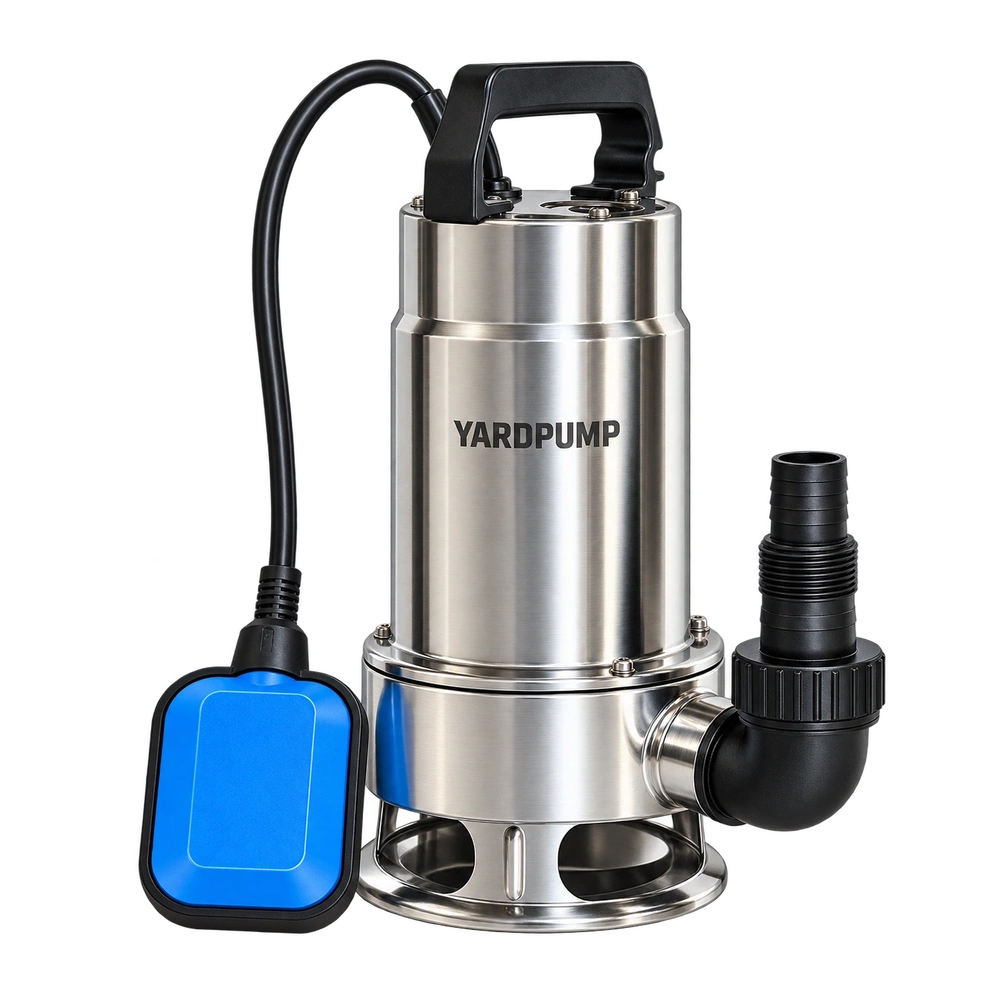
The short answer
Reorder a pump SKU when usable inventory position falls below expected demand during replenishment lead time plus a justified safety buffer. Do not set one fixed reorder quantity for every color, plug or power version. A product range can look well stocked in total units while the one electrical version customers need is already short.
The calculation is simple; the discipline is not. The main errors are using optimistic shipping lead times, mixing non-interchangeable variants, and counting allocated stock as freely available.
The minimum worksheet
| Field | Meaning | Practical question |
|---|---|---|
| SKU and market | Exact power, voltage/frequency, plug and control version | Can these units actually fill the same order? |
| Demand per week | Recent shipped demand, with seasonality noted | Is this normal or a one-off project? |
| Replenishment lead time | Confirmation, production, inspection, freight and clearance | When will saleable units actually arrive? |
| Safety stock | Buffer for demand and lead-time uncertainty | What shortage risk is acceptable? |
| Inventory position | On hand + confirmed inbound − committed/backordered | How many units remain to promise? |
| Reorder trigger | Lead-time demand + safety stock | Is inventory position already below this number? |
Illustrative arithmetic only—not YARDPUMP sales data: A distributor ships an average of 10 units of a particular 230 V pump SKU per week. If the realistic replenishment lead time is eight weeks and the chosen buffer is 30 units, the reorder point is 10 × 8 + 30 = 110 units. If 120 are on hand but 15 are committed to confirmed orders and none are inbound, the inventory position is 105. That SKU has crossed the reorder trigger. This calculation says when to review a purchase order; the final order quantity still depends on order economics, forecast and available capital.
Four checks before placing the PO
Check the variant, not just the family. A 120 V/60 Hz SKU cannot automatically replace a 230 V/50 Hz SKU. A float-switch version may not substitute for a manual model. Color and private-label packaging may also be contractually fixed.
Use a realistic door-to-door lead time. Production time alone is not replenishment lead time. Include sample or artwork changes when they affect the order, plus inspection, shipment, customs and receiving. Record a range rather than pretending every delivery is identical.
Separate repeat demand from project spikes. One contractor’s large order is not proof of a permanent higher weekly run rate. Flag abnormal orders and maintain a base forecast plus a project pipeline.
Decide which shortage hurts most. A fast-moving core SKU may justify more buffer than a niche version, but an expensive slow mover can consume cash. Use actual stockout costs, margin, customer commitments and supplier flexibility—not an invented universal buffer percentage.
What to review each week
A compact dashboard should show, by SKU: sellable stock, committed stock, inbound stock with realistic arrival dates, trailing demand, forecast demand, reorder point, and a note explaining exceptions. Highlight stock at risk before the next receipt, not simply products with the fewest units.
If the same pump family can serve several channels, coordinate listings and carton versions before combining inventory. If it cannot, keep the stock separate even when the housings look identical.
Distributors planning a new assortment can compare the product range, the OEM configuration options and send an RFQ with a target market, variant list and estimated order pattern. The purpose of the RFQ is to validate feasible configurations and commercial terms, not to imply any fixed lead time or MOQ.
FAQ
Should I reorder when stock reaches four weeks of sales? Not necessarily. Four weeks may be too late if replenishment takes eight weeks, or too early for a readily available SKU. Use lead time and uncertainty.
Should safety stock be the same for every SKU? No. Demand variability, supply variability, service commitment and capital cost differ by variant.
Can I use advertised maximum flow to group equivalent SKUs? No. Equivalence also depends on the actual Q–H curve, liquid, electrical version, controls, outlet and installation limits.
Editorial boundary: All numerical quantities above are clearly labeled examples, not market observations or YARDPUMP operational results.