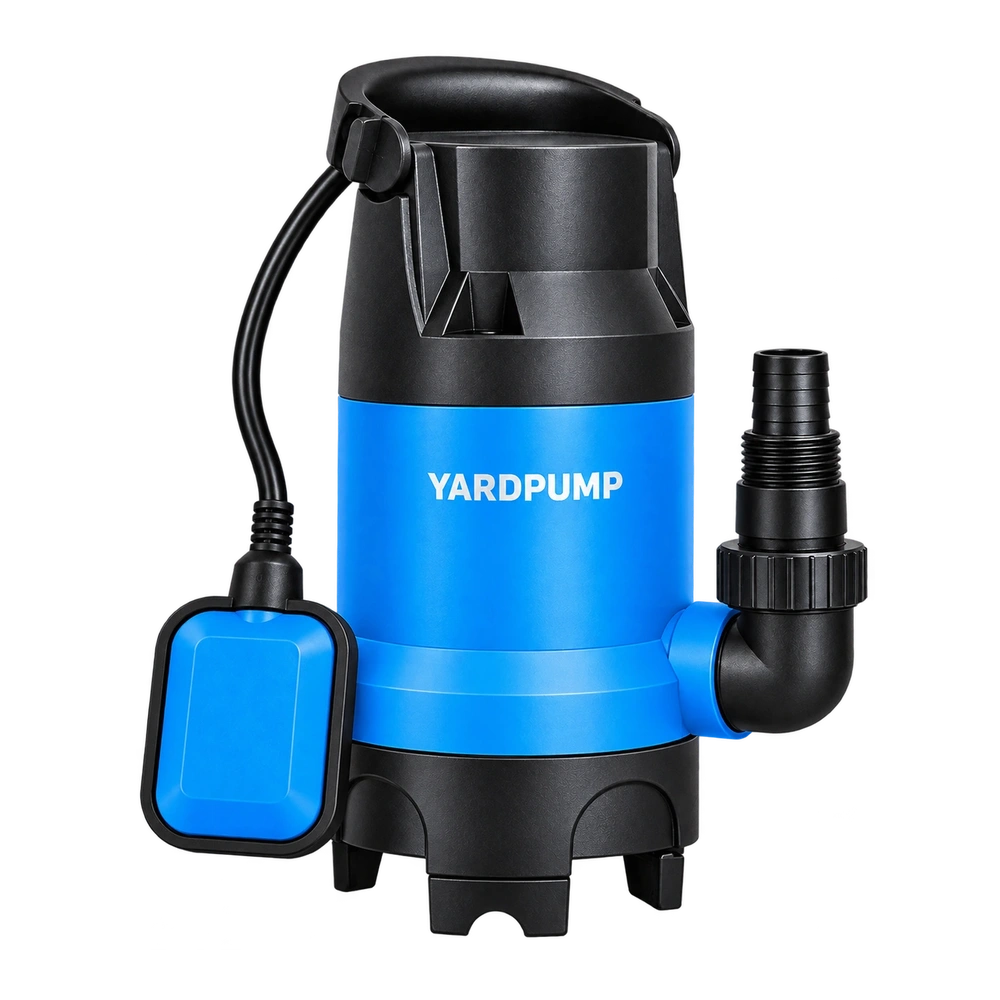
A garden pump waters normally during the day but runs without delivering water the following morning. Adding priming water restores operation. In this typical scenario, first investigate loss of the required retained water or gradual air entry on the suction side. Replacing the motor with a larger one does not address those mechanisms.
Self-priming describes a particular pump’s ability to evacuate suction-line air under stated conditions. It does not mean that a completely dry pump can run indefinitely until water appears.
Separate loss during shutdown from air entry during operation
If the pump runs steadily but becomes harder to restart after a longer stop, prime retention deserves particular attention. If delivery is already intermittent, contains air or fails when the source level falls, also investigate running air ingress, restrictions and inlet pressure margin. More than one problem can be present.
Water may return through a leaking foot valve or escape through a casing drain plug, filling point or another joint. Air entering an external connection can allow the water column to recede. The investigation therefore covers the complete suction system, rather than the pump casing alone.
Disconnect and isolate electrical power before opening a filling point or disturbing pipework, and release any retained pressure. Do not use hands to search for leaks beside energised equipment.
Turn “overnight” into an observable condition
Prime the exact model using its instructions. Record the source level, suction route, initial casing fill and time required to establish normal delivery. After stopping, inspect retention at planned intervals without repeatedly adding water. Where the filling point does not permit safe observation, do not improvise a transparent pressure-containing component.
Suppose, as an illustrative example, the arrangement restarts after ten minutes but needs refilling after eight hours. That supports a time-dependent loss-of-prime investigation. It does not distinguish a leaking foot valve from an air-admitting joint. Those assumed periods are not acceptance limits. A competent person can inspect components systematically or perform sectional retention and air-tightness checks on an approved test arrangement.
| Observation | First checks | Other possibilities |
|---|---|---|
| Casing water level falls | Foot valve, drain plug and filling closure | Air entry allowing drainback |
| Casing retains water, suction pipe does not | Foot valve and suction connections | Trapped air and priming conditions |
| Failure occurs only at low source level | Lift and inlet submergence | Strainer restriction or hose collapse |
Inspect the foot valve as an installed component
Sand, leaf fragments or a damaged seating surface may prevent the valve from retaining the water column. Incorrect orientation, a tilted installation or a valve unsuitable for its installed position can also interfere with closure. Preserve debris and contact marks before cleaning, otherwise the most useful evidence may disappear.
A replacement valve must be checked for flow resistance as well as thread compatibility. On the suction connections, use the sealing method intended for the joint. A washer-sealed connector does not become better merely by adding thread tape. Excessive tightening can damage plastic threads or distort the sealing arrangement.
After repair, repeat the original water level and full shutdown interval. Keep the power supply, hose route and pump position unchanged during the comparison. Changing several conditions simultaneously may restore operation without revealing which change mattered.
Close the complaint with a reproducible finding
A useful service conclusion states where prime was lost, under which conditions, and how long the repaired assembly subsequently retained it. “Pump will not suck” leaves the next technician with almost no decision value. Record replaced parts and the observed condition before replacement.
If the necessary water is retained but delivery still cannot start, continue with the model-specific self-priming passage, air evacuation and performance checks. Stop when the permitted priming period is exceeded. Repeatedly extending dry running can turn an installation problem into seal or thermal damage.
Consider access to a submerged foot valve at the purchasing stage. Repeated refilling is not a maintenance strategy for an inaccessible connection. Record and retain the original valve before replacement. If the strainer is cleaned, hose reconnected and valve replaced simultaneously, restored operation will not reveal which action mattered, making the next service decision less repeatable.
Frequently asked questions
Can a discharge check valve replace a foot valve?
Not automatically. They occupy different positions and serve different retention functions. Follow the pump’s specified installation arrangement.
Does water in the casing prove that the suction pipe is full?
No. Some casing water may remain while the suction line has admitted air, increasing the air-removal task at the next start.
Can a stronger self-priming pump compensate for a leaking connection?
It should not be used as that remedy. Continuing air entry compromises stable delivery and makes starting time and operating temperature harder to control.