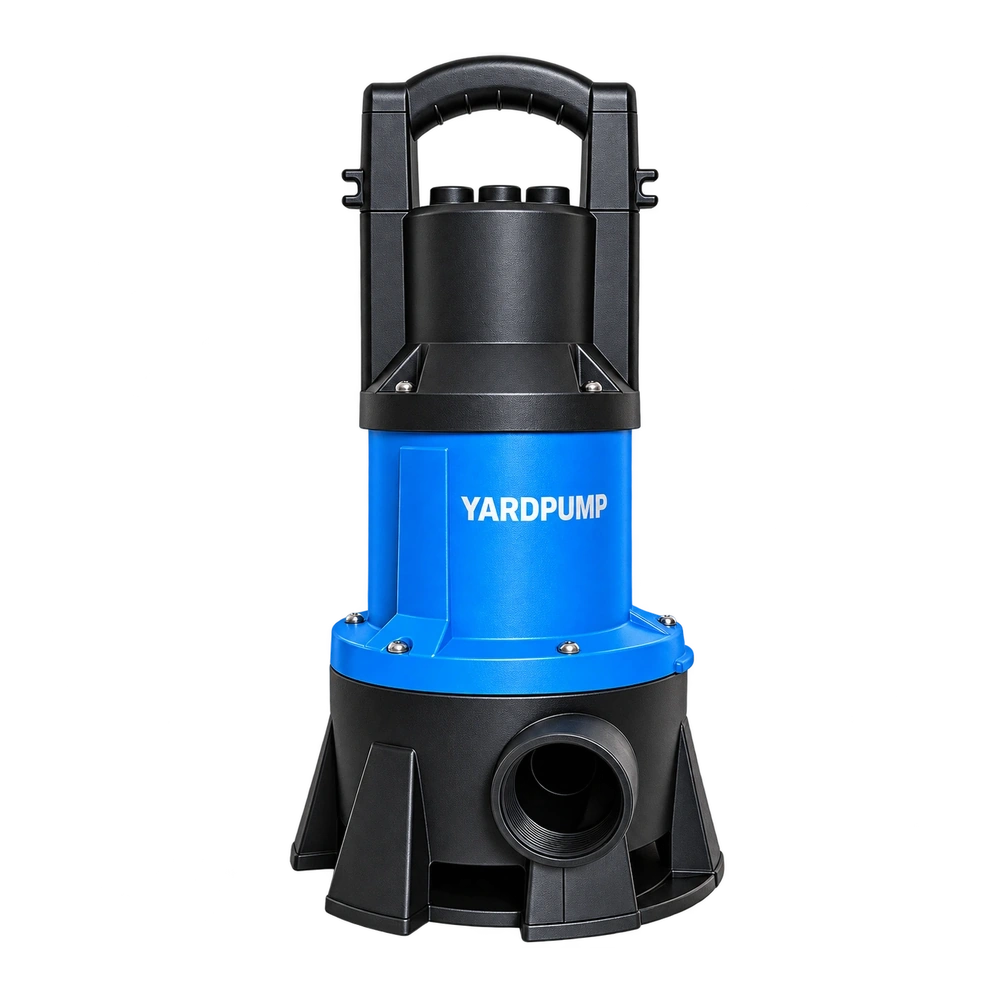
Direct answer. A dirty-water pump and a low-level clean-water pump solve different parts of a flood-cleanup problem. The first stage may require passage of suitable soft solids and enough flow for bulk removal. The final stage may require a low suction inlet to remove a shallow layer of clean water. A pump advertised for larger particles does not necessarily leave less water behind; a low-level pump is not automatically safe for muddy, gritty or sewage-contaminated water. Sometimes one verified model covers the duty; sometimes two stages or professional remediation are necessary.
The distinction matters to distributors. A buyer complains that a dirty-water pump stopped while a shallow puddle remained. That may be normal for its inlet height and control setting, not evidence of a failed motor. Selling a low-level pump as the replacement without asking what debris remains can create a second problem: blocked inlet, abrasion or an unsafe operating condition.
Start with safety and water condition
Do not enter floodwater where electrical circuits, submerged outlets, structural damage, chemicals or sewage may be present. Isolate power through qualified personnel and follow local flood-response guidance. Water of unknown contamination should not be treated as ordinary clean-water drainage. Pump selection comes after the site is safe to access.
Once safe, inspect the liquid. Leaves and soft debris, abrasive sand, stringy fibers and dense mud are not interchangeable. A nominal solids-passage diameter describes a geometric limit under specified conditions; it does not certify sand abrasion resistance or sludge-handling ability. The solids, sand, fibers and sludge guide explains this distinction in more detail.
Two stages, two acceptance criteria
| Stage | Water condition | Main question | What to verify |
|---|---|---|---|
| 1. Bulk removal | Water with verified allowable soft particles | Can the pump pass the expected material and deliver useful flow at working head? | Particle limit, intake design, flow curve, hose, control and safe installation |
| 2. Final shallow-water removal | Settled and confirmed clean water | Can the inlet pick up water at the remaining level without unsafe dry running? | Residual-water specification, start/stop threshold, manual supervision and inlet cleanliness |
| 3. Cleanup beyond pumping | Silt, contaminated residue, damp surfaces | What cannot be removed by this pump? | Wet vacuum, filtration, sanitation or professional remediation as appropriate |
Residual level is not start level. A pump may be capable of drawing down to a shallow residual level once already running, yet need a higher water level to start. Likewise, a float switch can stop a dirty-water pump well above the floor. Do not confuse these numbers when comparing catalogues.
A practical distributor scenario
A storage room has standing water after a storm. During the first pass, the water contains soft leaves and floating debris. A suitable dirty-water pump may be used only if the actual material, chemistry and solids are within its documented limits. After the bulk water is removed and remaining debris has been cleaned away, a low-level clean-water pump may be considered for the last shallow layer. The operator still needs to watch the inlet, cooling and permitted running condition. A “7 mm residual water” statement is not permission to run dry indefinitely.
A compact pump is not the correct tool for every flood. Sewage, heavy grit, fibrous waste or structural hazards may call for specialist equipment and trained personnel. Even a correctly selected pump cannot make contaminated floodwater safe to touch.
Where YARDPUMP models fit—and where they do not
The WQD-SD family is documented for clean and dirty water with a 5 mm soft-particle range; that does not make it a sewage or sand-slurry pump. Its application and residual level must be checked against the selected version. The QDX-PT and QDX-PH families are documented clean-water low-level pumps with a published 7 mm residual-water level in their verified configurations. QDX-PT has no float switch in its documented configuration; QDX-PH has automatic level-control positioning. Neither should be sold as a replacement for a solids-handling pump without confirming that the remaining water is clean and the duty is suitable.
For a product-range discussion, the distributor should stock and explain the job distinction, not merely place the two pumps side by side with wattage labels. A sales card can ask: What is in the water? What remains after the first pass? How deep is the remaining layer? Who supervises the pump? What does the hose route require?
Selection conclusion: Bulk drainage and final cleanup have different success criteria. Match each stage to water condition, working flow, control and safe operating limits.
FAQ
Can a dirty-water pump leave a puddle even when it is working correctly? Yes. Intake geometry and automatic stop level can leave water above the floor.
Can a low-level clean-water pump handle muddy floodwater? Do not assume so. Check solids and abrasion limits; clean-water pumps are not a substitute for debris removal.
Does 7 mm residual water mean the pump starts automatically at 7 mm? No. Residual drawdown and automatic start threshold are different specifications.
Can I use either pump in sewage-contaminated floodwater? Only if the exact model and safe operating procedure explicitly support that liquid; otherwise use suitable specialist equipment and professional guidance.