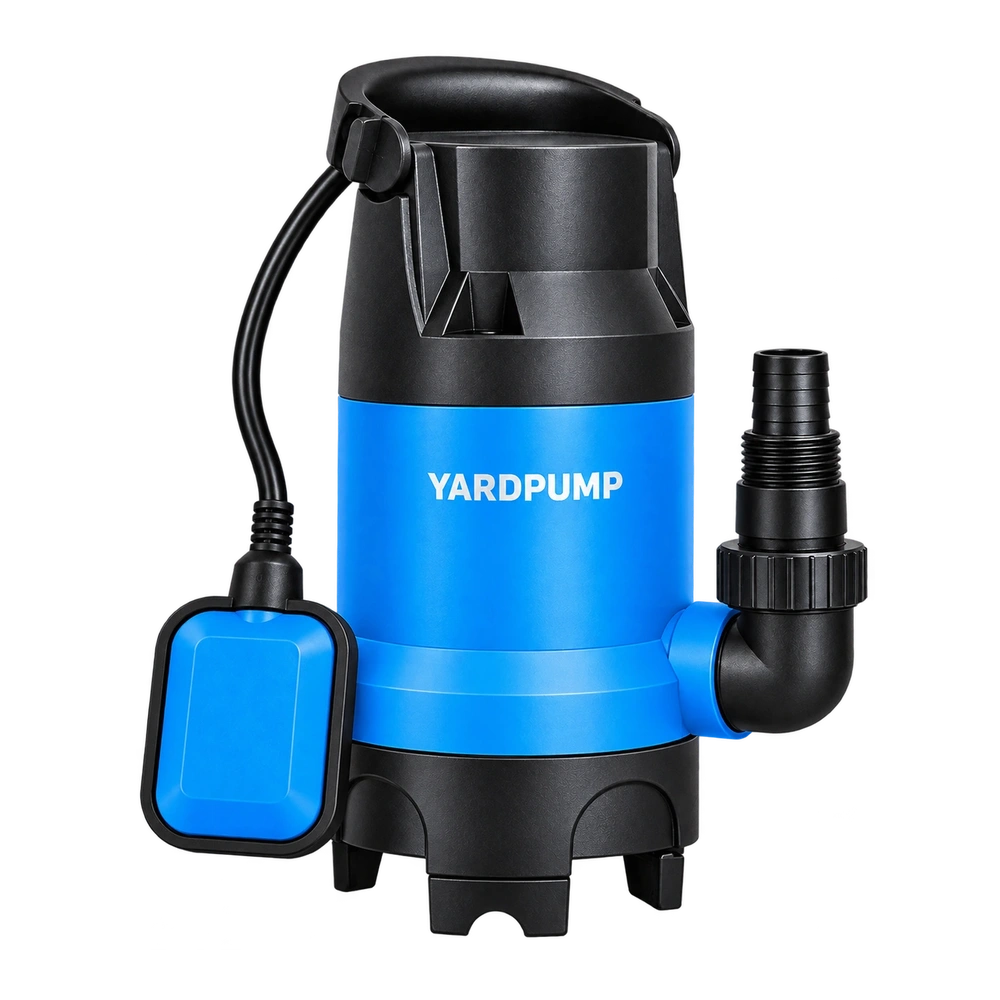
Model familyYARDPUMP WQD-SD submersible pump
WQD-SD · model overview

YARDPUMP / WQD-SD

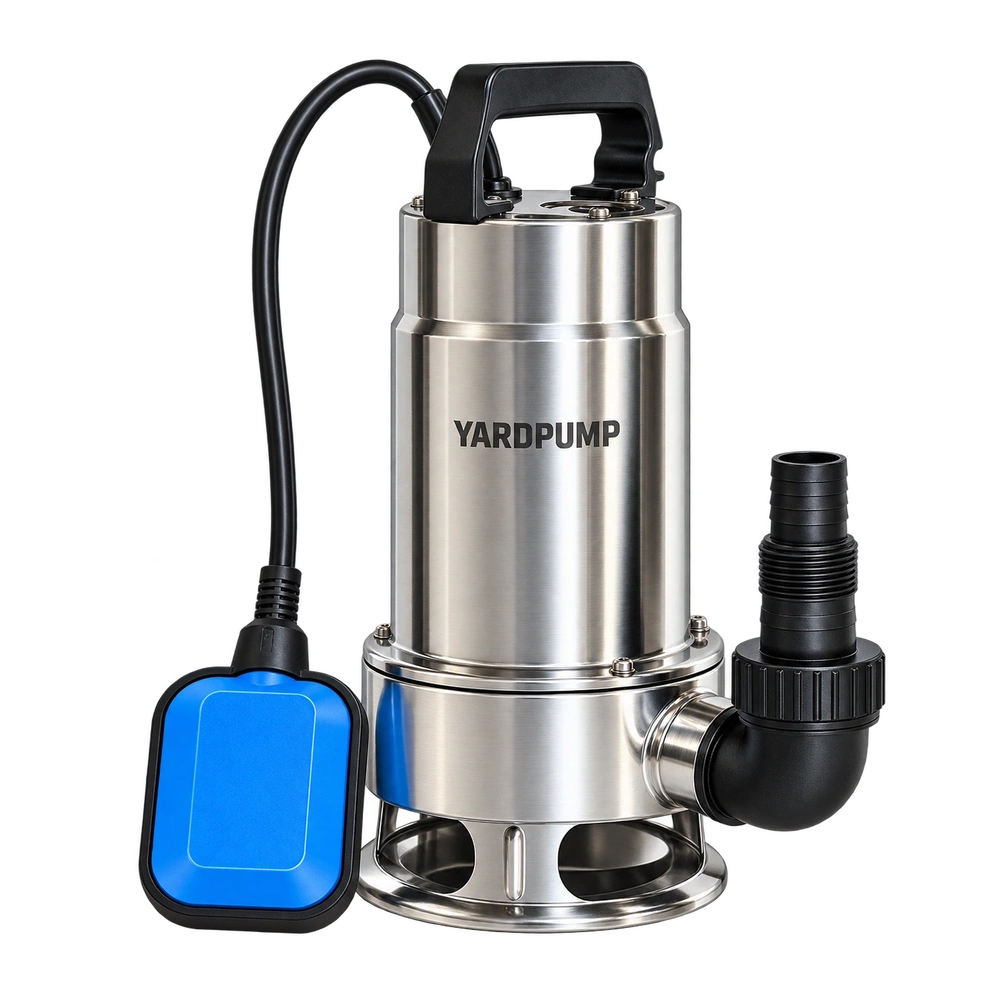
WQD-SD Clean & Dirty Water Pump with Stainless-Steel Housing

A 304 stainless-steel-housing family for clean water and water containing soft solids. Compare the 550–750 W variants within the published liquid and solids limits.

Max. flow rate (Qmax)
8–12m³/h
Max. head (Hmax)
7–9m
Distribution & OEM sourcingCompare individual power variants

Specifications

Choose a Power Version

Compare the performance curve for the flow you need at your working head. Maximum flow and maximum head are measured at different points on the pump curve.

Available Power Ratings

550–750 W

Each listed rating has its own performance data. For a final recommendation, request the performance curve, dimensions and electrical details for the version you plan to order.

Power ratingAvailable electrical version rangeMax. flow rate (Qmax)Max. head (Hmax)Discharge connectionPower cable
550 W110–240 V / 50–60 Hz8 m³/h7 m50 mm / G1-1/25–10 m
750 W110–240 V / 50–60 Hz12 m³/h9 m50 mm / G1-1/25–10 m
Project-specific powerConfirm AvailabilityConfirm AvailabilityConfirm Availability50 mm / G1-1/2Project Requirement

110–240 V / 50–60 Hz describes the electrical version range available across the family. It does not mean one universal wide-voltage motor is used for every order.

550 W110–240 V / 50–60 Hz
Max. flow rate (Qmax)
8 m³/h
Max. head (Hmax)
7 m
Discharge connection
50 mm / G1-1/2
Power cable
5–10 m
750 W110–240 V / 50–60 Hz
Max. flow rate (Qmax)
12 m³/h
Max. head (Hmax)
9 m
Discharge connection
50 mm / G1-1/2
Power cable
5–10 m
Project-Specific Power · Review RequiredElectrical and hydraulic data must be confirmed
Max. flow rate (Qmax)
Confirm Availability
Max. head (Hmax)
Confirm Availability
Discharge connection
50 mm / G1-1/2
Power cable
Project Requirement
SpecificationsRated Performance, Construction & InstallationShow Details
Technical itemSpecification
Rated flow rate5–7 m³/h
Rated head5–7 m
Adaptor / connector size25 / 32 mm
Impeller materialPA66
Housing material304 stainless steel
Max. liquid / ambient temperature40 °C
Max. submersion depth5 m
Ingress protectionIP68
Insulation classClass B
Permitted pH rangepH 4–10
Max. particle / soft-solids size5 mm
Flat-suction / remaining-water level90 mm
Motor protectionOvertemperature protection · automatic thermal cut-out / reset
Liquid compatibilityUse within the published pH and temperature limits. For seawater, chemical exposure or unusual liquids, confirm the complete wetted-material compatibility before use.
Level controlFloat switch · automatic start / stop

Performance values are published as model-family or power-variant data as shown above. Liquid compatibility is pH 4–10. For final selection, use the applicable Q–H curve, dimensional drawing and destination-market documents for the selected electrical version.

Budget & Options

Compare Options for Your Budget

These are budget guides, not fixed product grades. You can specify the components and requirements you need for the model. Tell us the water, flow, lift, quantity and target unit price, and we’ll compare suitable options.

01

Cost-focused build

Work toward the lowest validated factory cost that still meets the required flow, total head, power, safety and destination-market requirements. Engineering chooses the internal BOM rather than asking the buyer to specify every component.

02

Balanced retail / distribution build

Recommended starting point for most importers, distributors and private-label buyers. Balance purchase price, service life, user experience and component consistency around the required duty point.

03

Application-specific build

Use the available budget only where added durability, corrosion, sealing, electrical or QC margin addresses a defined duty or market risk. Engineering proposes the higher-spec BOM and validation scope for review.

Your Requirements

Tell Us What You Need

Start with the water, required flow and lift, quantity and target unit price. Leave fields open if you would like a recommendation.

WQD-SD · Indicative FOB Price · NingboUS$26–49 / unitMetal / stainless dirty-water family.

Tell Us What You Need

Start with the job, not the components.

Leave uncertain fields open. We can recommend a starting point from the water, flow, lift, quantity and market.

Mainstream build selected.Recommended when the duty point is known and you want us to propose the component specification.
Selected routeStandard Option · US$34–41 · FOB Ningbo
Request a Quote
Advanced RequirementsAdd Component & OEM RequirementsComponent & OEM Requirements

Component & OEM Requirements

Choose the requirements you already know.

Leave other items as “Recommend for Me.” We’ll review the choices together; this form does not confirm that every combination is available on the selected model.

01Motor & ElectricalMatch the motor, electrical supply and protection requirements to your market and how the pump will be used.0
Motor WindingDo you have a winding material requirement?Selection Guide
Insulation ClassWhich insulation class do you require?Selection Guide
Voltage & FrequencyWhat electrical supply does your market use?
Run CapacitorDo you have a capacitor or supplier requirement?Selection Guide
Thermal ProtectionDo you have a thermal-protection requirement?Selection Guide
02Shaft, Housing & BearingsTell us which mechanical materials or component standards matter to your application. Changes are reviewed together with the selected model.0
Shaft MaterialDo you have a shaft material requirement?Selection Guide
Housing MaterialDo you have a housing material requirement?Selection Guide
BearingsDo you have a bearing brand, series or inspection requirement?Selection Guide
Fasteners & HardwareDo you have a fastener material or corrosion-resistance requirement?Selection Guide
Handle & Lifting PointDo you need a specific handle or lifting arrangement?Selection Guide
03Seals & Water ProtectionSeals, elastomers, oil chamber and cable entry work together to protect the pump. Tell us any specific requirements you already have.0
Seal ArrangementDo you have a preferred seal arrangement?Selection Guide
Mechanical Seal FacesDo you have a seal-face material requirement?Selection Guide
Oil ChamberDo you require an oil chamber?Selection Guide
O-Rings & ElastomersDo you have an elastomer material requirement?Selection Guide
Cable Entry & Strain ReliefDo you have a cable-entry or anti-wicking requirement?Selection Guide
04Impeller, Inlet & OutletImpeller, inlet, casing and outlet changes can affect flow, head and particle passage. We’ll review them together with the performance you need.0
Impeller DesignDo you have an impeller design requirement?Selection Guide
Impeller materialDo you have an impeller material requirement?Selection Guide
Pump Casing / VoluteDo you have a casing or volute material requirement?Selection Guide
Inlet / StrainerWhat should the inlet prioritize?Selection Guide
Outlet & Hose AdaptorWhich outlet or hose connection do you need?Selection Guide
05Controls, Cable & PlugChoose how the pump starts and stops, then tell us the cable, plug and accessory requirements for your market.0
Level ControlHow should the pump start and stop?Selection Guide
Cable LengthHow much cable length do you need?Selection Guide
Cable TypeDo you have a cable construction or standard requirement?Selection Guide
Plug / TerminationWhich plug or cable termination do you need?
AccessoriesWhat should be included with the pump?
06Branding, Packaging & DocumentsTell us how the pump should look, how it should be packed and which documents or labels your market needs.0
Pump ColorDo you need a standard or custom color?Selection Guide
Logo & Product MarkingHow should your brand appear on the pump?
Nameplate & LanguageWhich language and product information should appear on the nameplate?
PackagingWhat packaging do you need?
Manual & InsertsWhich manual languages or inserts do you need?
Barcode & Retail LabelsDo you need barcodes or warehouse labels?
Inspection & Document PackDo you need additional inspection, traceability or documents?
07Application & Operating ConditionsDescribe the job so we can review the model, components and controls against the real water and operating conditions.0
Water / LiquidWhat will the pump move?
Operating PatternHow will the pump be used?
Particles / Soft SolidsWhat type and size of particles are in the water?
Remaining Water TargetHow much water can remain after draining?
InstallationWhere and how will the pump be installed?
Project PriorityWhat matters most for this project?
08Order & Approval RequirementsAdd the order quantity, annual volume, quotation basis and how you want the sample or production approved.0
First Order QuantityHow many units are you planning for the first order?
Annual VolumeWhat annual volume do you expect?
Warranty / After-SalesDo you have a warranty or after-sales requirement?
Delivery TermsWhich delivery term do you need for the quotation?
Sample & ApprovalHow would you like to approve the product before mass production?
Understand the Component Choices
Motor winding conductor

Copper or aluminum winding?

Compare options ↗
Aluminum windingValue-engineered option where the motor is redesigned and validated for the required current and temperature rise.
Copper windingHigher-conductivity option where the motor design benefits from lower conductor resistance or additional thermal margin.

Engineering note: Wire size, winding turns, slot fill, joints, varnish and temperature-rise validation change with the conductor choice.

Motor insulation system

Class B or Class F?

Compare options ↗
Class BCost-effective thermal system for validated general-duty configurations.
Class FHigher thermal-class option only where the complete insulation system, temperature-rise target and validation plan are designed around Class F.

Engineering note: The class applies to the complete insulation system, not just one wire or a nameplate label.

Rotor / pump shaft material

Standard stainless, AISI 304 or AISI 316?

Compare options ↗
Ferritic / martensitic stainlessCost-focused shaft option; exact grade, hardness and corrosion requirement are confirmed by project.
AISI 304 stainlessGeneral corrosion-resistant upgrade for many water applications.
AISI 316 / 316L stainlessHigher-alloy option for compatible projects where chloride exposure or the material specification justifies it; full wetted-material compatibility still requires review.

Engineering note: Shaft alloy must be matched to strength, straightness, seal-journal finish, bearing fit and the pumped liquid.

Motor housing / metal shell

Polymer, aluminum or stainless construction?

Compare options ↗
Engineering polymerLightweight and corrosion-resistant where the family architecture uses a molded motor shell.
Aluminum alloyStiff, thermally conductive metal option where the design supports it.
Stainless steel shellMetal-shell option on compatible family designs where the construction or material requirement justifies it.

Engineering note: Housing changes affect cooling, grounding, sealing interfaces, wall thickness and the complete motor architecture.

Shaft sealing arrangement

Lip seal, single mechanical seal or dual mechanical seal?

Compare options ↗
Radial lip / skeleton sealCompact, cost-focused sealing element for architectures where it is suitable, often as a secondary barrier.
Single mechanical sealBalanced clean/general-water sealing architecture when face lubrication and cooling are adequate.
Dual mechanical sealTwo-seal architecture for compatible designs where the duty, leakage risk or service-life target justifies the added complexity.

Engineering note: Seal arrangement must be matched to the shaft, face materials, liquid, temperature, oil cavity and leak-test method.

Mechanical-seal face material

Carbon / ceramic or silicon carbide?

Compare options ↗
Carbon / ceramicCommon value/balanced pairing for clean-water and general utility service.
SiC / SiCHard, wear-resistant face pairing for compatible duties where abrasion or service-life requirements justify it; dry-running behavior and lubrication still matter.

Engineering note: Face material is selected together with lubrication, spring hardware, elastomers and expected abrasiveness.

Oil chamber / seal lubrication

Dry/simple seal cavity or oil-lubricated seal chamber?

Compare options ↗
Without dedicated oil chamberSimpler, compact architecture for applications where the selected seal system is validated without a separate oil cavity.
With oil chamberAdds a lubricated seal chamber where the selected architecture and duty justify the additional sealing system and process controls.

Engineering note: Oil type, fill quantity, plug sealing and leakage validation become controlled BOM/process items when an oil chamber is used.

Bearing package

Standard or specified branded bearing package?

Compare options ↗
Standard sealed ball bearingCost-effective package when load, alignment and temperature are comfortably controlled.
Specified branded bearingLocked bearing series, clearance/grease specification and approved supplier list where consistency or service-life targets justify it.

Engineering note: Bearing upgrades still require correct shaft/housing fits, alignment, lubrication and water-ingress control.

Power cable

5 m, 6 m, 8 m, 10 m or project length?

Compare options ↗
5–6 mCost- and packing-efficient for short-reach household and retail configurations.
8–10 mMore installation reach and less dependence on extension cords.
Project-specific cableLength, conductor size, jacket and plug can be matched to destination-market and installation requirements.

Engineering note: Longer cable changes copper usage, voltage-drop margin, packaging, plug selection and certification scope.

Water-level control

Manual, float switch or compact automatic control?

Compare options ↗
No float / manual controlCompact, cost-focused configuration for supervised transfer applications.
Tethered float switchConventional automatic start/stop for pits and drainage where swing space is available.
Compact / integrated level controlProject option for narrow installations where the selected product-family architecture and electrical validation support it.

Engineering note: Control choice affects start/stop levels, residual water, pit clearance and electrical validation.

Impeller geometry / hydraulic configuration

Which PA66 impeller geometry fits the hydraulic duty?

Compare options ↗
Open / wider-passage geometryPA66 impeller geometry considered where passage area and debris tolerance are important within the selected family limits.
Semi-open / balanced geometryPA66 geometry balancing hydraulic performance, passage area and manufacturing robustness where supported by the family.
Closed / efficiency-focused geometryPA66 geometry considered where the hydraulic platform supports it and clean-liquid efficiency or head is the priority.

Engineering note: PA66 remains the impeller material baseline for the current verified families. Geometry must be engineered with the volute and duty point; open, semi-open or closed concepts are not drop-in cosmetic substitutions.

Pump body color & branding

Standard color or private-label color?

Compare options ↗
Standard production colorLowest-complexity route for MOQ, production planning and common spare-part inventory.
Custom molded / coated colorPantone or approved sample matching for private-label projects.
Full private-label finishColor, logo, nameplate, carton, manual and barcode coordinated as one controlled private-label program.

Engineering note: Color changes can affect MOQ, purge/scrap, lead time and required safety-marking contrast.

Discharge & hose adaptor

Which outlet and hose sizes should be packed with the pump?

Compare options ↗
Family-standard outletLowest-complexity production and packaging option.
Multiple hose adaptorsRetail-friendly stepped/adaptor options matched to common hose sizes.
Market-specific threaded / quick connectionProject option where the pump architecture and target-market standard permit it.

Engineering note: The smallest bore in the outlet path can restrict real flow, so connection changes need hydraulic review.

Performance Curves & DocumentsOpen Model-Specific Technical InformationShow Details

Performance Curves & Documents

Request the Documents for the Version You Plan to Order

Request the performance curve, dimensional drawing, materials, water limits, applicable compliance files, manual and packing details for the model and electrical version you plan to order.

01

Q–H performance curve

Use the latest Q–H curve for the selected power variant and compare it with the required duty point: flow rate at total head. Qmax and Hmax are curve endpoints, not one simultaneous operating point.

02

Dimensional drawing

Use the model drawing to check dimensions, outlet orientation and installation clearances before packaging or system integration.

03

Materials & construction

Match housing, impeller, shaft and sealing materials to the selected variant, liquid condition and destination-market requirement.

04

Pumped-liquid limits

Documented particle / soft-solids size: 5 mm. pH range: pH 4–10. Do not extend this into sewage, cutter/grinder, abrasive-sand or chemical applications beyond the stated limits.

05

Compliance documents

Request only the certificates, test reports and declarations that apply to the selected model, electrical version, standard and destination market.

06

Manual & packing data

Align the manual, carton information, labels, barcode requirements and shipment configuration before mass production.

View technical documents

Model-specific files are revision controlled.

Technical files are supplied by model and revision. Request the applicable pack for your power variant and market requirements.

Product DatasheetAvailable on request
Instruction ManualAvailable on request
Dimensional DrawingAvailable on request
Compliance DocumentsAvailable on request
View technical documents ↗
Need the Document Pack for Your Version?

Tell us the model, power rating, electrical supply and destination market. We’ll confirm the relevant document version.

Request Documents

OEM & Private Label

Start with the Pump’s Job

WQD-SD is listed as a clean & dirty water submersible pump family. Suitability depends on the liquid, duty point, installation, operating conditions and selected variant. Documented particle / soft-solids size: 5 mm. pH range: pH 4–10. Do not extend this into sewage, cutter/grinder, abrasive-sand or chemical applications beyond the stated limits.

02

Compare the Power Version

Compare flow at your working head, electrical supply, outlet, cable and control method.

Back to specifications ↑
Ordering tip

Quote the exact power variant and configuration, not only the family name.

Keep power rating, discharge connection, power cable, control method and supply voltage/frequency together in one inquiry. Add destination-market requirements where they affect the product or document set.

Technical tip

Check flow at your working head before comparing price or options.

Use the performance curve to shortlist the right power version before discussing OEM changes.

OEM tip

Start with a model before finalizing branding and packaging.

Start with an existing model, then define the changes your market needs.

WQD-SD FAQ

Common questions about WQD-SD.

Use these answers to connect the model specifications with water, hose, drainage level, controls and ordering requirements.

What makes WQD-SD different in the current dirty-water range?

WQD-SD is the 304 stainless-steel clean-and-dirty-water family. Compare it when the project calls for a metal housing together with the documented 5 mm soft-solids range.

How low can it drain the water?

The residual water level is 90 mm. Starting water level and automatic switching levels may be different. Use the instructions for the selected version and installation.

Does it start and stop automatically?

The current WQD-SD configuration includes automatic level control. Confirm the control arrangement and switching levels for your selected version, and leave enough space for it to operate.

What water can it pump?

Use it for water containing soft particles within the stated 5 mm range, pH 4–10 and a maximum liquid temperature of 40 °C. This does not establish suitability for abrasive sand, fibrous sewage or dense slurry.

Which hose connection should I use?

The listed outlet is 50 mm / G1-1/2, with 25 / 32 mm hose adaptor sizes. Choose the hose by its internal diameter and the flow you need. Confirm the adaptor and accessories included in your order.

Why is the flow lower than the listed maximum?

Lift, hose friction, bends and fittings reduce the flow. Use the performance curve for the selected power and electrical version to estimate the flow in your installation.

Can I use maximum flow and maximum head together?

No. They are measured at different points on the pump curve. Check the flow at the head your installation requires.

Can WQD-SD run dry?

Do not treat thermal protection as permission to run without water. Follow the operating instructions and stop the pump before dry running. Disconnect the power before checking or clearing it.

Can I order it under my own brand?

Share the quantity, market, electrical requirements, logo and packaging brief. Component or design changes are reviewed against the selected model before quotation.

What do you need for a quotation?

Tell us the model or application, water condition, required flow and lift, quantity and destination market. Add any cable, plug, branding or packaging requirements you already know.

Can I request technical documents?

Yes. Tell us the model, power and electrical version, destination market and documents needed. Datasheets, drawings, manuals and compliance files must match the version you plan to order.

WQD-SD · Request a Quote

Tell us the water, required flow and lift, quantity, electrical supply and destination market. We’ll help confirm the right version.

Request a Quote