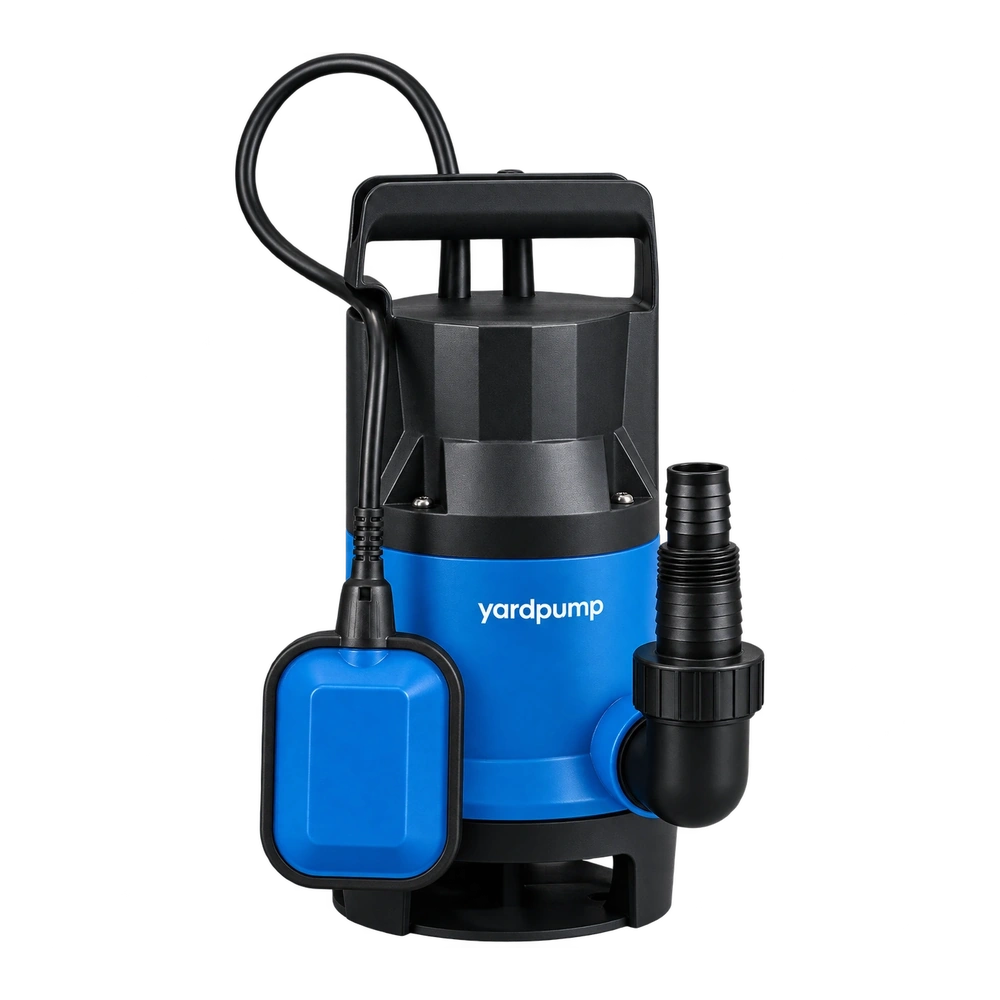
Direct answer. For a conventional two-pole induction motor supplied at 50 Hz, the synchronous magnetic-field speed is 3,000 rpm. The rotor normally turns below that speed while producing torque. A measured 2,830 rpm corresponds to approximately 5.7% slip relative to synchronous speed. That number is not automatically a defect or proof of quality. Whether it is acceptable depends on the motor design, rated load, supply voltage, temperature and the agreed test conditions. The statement does not apply unchanged to every motor technology.
A purchasing manager sees “2,830 rpm” in a sample report and asks why the supplier did not reach 3,000 rpm. Another supplier advertises “2,900 rpm” and appears better. Without load, voltage, current and hydraulic-duty information, the comparison is incomplete. The higher speed may simply have been measured at a lighter load.
Start with poles and frequency, not a marketing number
For an AC machine, the rotating magnetic-field synchronous speed is:
nₛ = 120 × f / P, where f is frequency in hertz and P is the number of poles.
| Supply and poles | Synchronous field speed | What it does—and does not—mean |
|---|---|---|
| 50 Hz, 2 poles | 3,000 rpm | Reference field speed, not necessarily shaft speed under load |
| 50 Hz, 4 poles | 1,500 rpm | A different motor design; not a slower version of the same two-pole rotor |
| 60 Hz, 2 poles | 3,600 rpm | A different electrical operating condition requiring version-specific validation |
Induction motors need relative motion between the rotor and rotating field to induce rotor current and generate torque. Under normal motoring load, the rotor therefore lags behind the field. This difference is called slip. Synchronous and permanent-magnet machines follow different rules, so always identify the actual motor type.
Calculate the 2,830 rpm example
Slip (%) = (synchronous speed − measured rotor speed) / synchronous speed × 100.
At 50 Hz with two poles: (3,000 − 2,830) / 3,000 × 100 = 5.67%. That calculation is exact for the stated speeds, but its engineering interpretation requires context. A small induction motor can have a higher full-load slip than a much larger motor. A rotor tested nearly unloaded may run closer to synchronous speed; heavier hydraulic loading generally changes the operating speed and current. Temperature and voltage also affect the result.
It is therefore wrong to declare “2,830 rpm passes” or “2,830 rpm fails” from the number alone. A supplier must compare it with the approved motor specification and the agreed load point.
A speed reading is not a pump-performance test
The impeller determines hydraulic loading. Two pumps with similar motor speed may have different impeller diameters, widths, clearances, curves and absorbed power. Likewise, a high rpm figure does not prove that the pump reaches the required flow at working head. The complete pump needs a hydraulic test under defined water conditions, plus electrical measurements and temperature checks.
For an OEM acceptance report, record the motor type and pole count; nominal and measured voltage/frequency; test water and immersion/cooling condition; hydraulic flow and head; input power, current and power factor where applicable; winding or housing temperature measurement method; rotor-speed instrument; duration; and pass/fail limits agreed before testing. If the shaft is inaccessible inside a sealed submersible assembly, a qualified test method must be selected; do not tell consumers to open an energised or wet pump to measure rpm.
Why 50 Hz and 60 Hz must be treated as separate versions
A two-pole field rises from 3,000 rpm at 50 Hz to 3,600 rpm at 60 Hz. That is a 20% change in synchronous speed, but it does not establish a 20% improvement in usable pump performance. Electrical design, torque, cooling, absorbed power and the hydraulic curve must be revalidated. The 50 Hz to 60 Hz version-control guide covers this separate approval question. For stator design and core length, see the lamination-stack guide.
For YARDPUMP, a QDX-PH model page provides the starting family specifications. Acceptance of a specific rpm value must still be tied to the approved electrical SKU and test record; the family page alone does not certify a particular measured speed.
Engineering conclusion: At 50 Hz, 2,830 rpm can be a plausible induction-motor operating speed. The useful question is whether the complete pump meets its approved hydraulic, electrical and thermal requirements at a defined duty point.
FAQ
Is 3,000 rpm the normal measured shaft speed of a 50 Hz two-pole induction motor? No. It is the synchronous field speed; the rotor normally runs somewhat slower under load.
Does lower rpm automatically mean a weak motor? No. Compare speed under the same voltage, load, temperature and motor design, alongside current and pump performance.
Is 2,900 rpm always better than 2,830 rpm? No. The first motor may simply have been tested at a lighter load or under different conditions.
Can I connect a 50 Hz pump to 60 Hz because the motor will just run faster? Not without checking the approved electrical version and complete motor-pump validation.