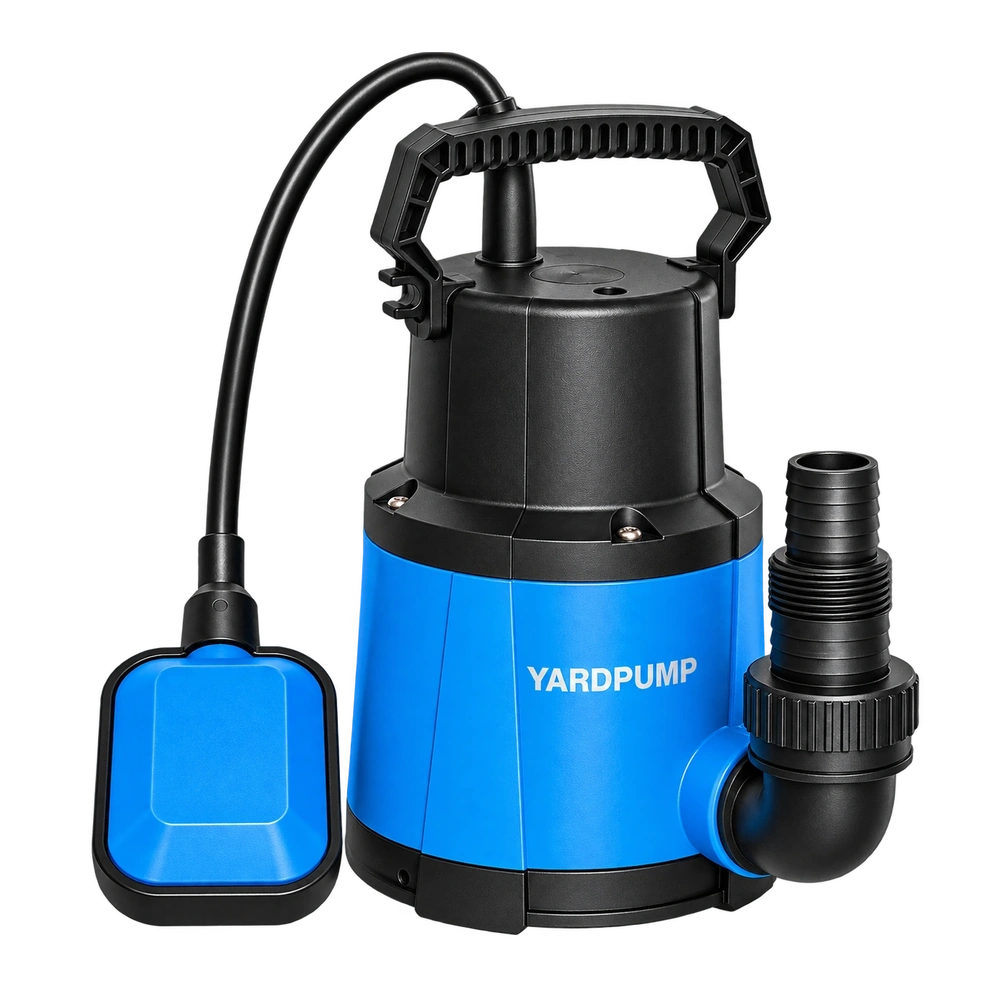
A plastic pump seals correctly when cold but seeps at a joint after temperature changes within its intended range. Retightening the screws may temporarily help, but that does not prove the original assembly torque was simply too low. Metal inserts, fasteners, plastic and the seal form one clamped system.
Differential expansion and time-dependent deformation can change its sealing state. Investigate the complete load path rather than the screw alone.
Cold dimensions do not describe the clamping history
Plastic and metal generally have different thermal expansion behaviour. Fibre orientation, moisture and sustained loading can also affect the plastic. As temperature changes, constrained differences in free expansion can become displacement, contact-pressure or stress changes.
Cooling need not restore the original clamping state exactly. The outcome depends on materials, geometry and loading history. Torque is an assembly input, not a direct measurement of clamp force. Thread and bearing-surface friction, insert movement, plastic bearing deformation and tightening sequence can all influence the result.
A calculation of free expansion is not a leak prediction
For illustration, assume an effective length of 30 mm, a plastic expansion coefficient of 80 × 10⁻⁶/°C, a metal coefficient of 17 × 10⁻⁶/°C and a temperature change of 40°C. The difference in unconstrained expansion is approximately 0.0756 mm.
These are assumed materials and dimensions, not product specifications. The result is not the actual joint opening or a leakage clearance. Real constraints, different path lengths, seal elasticity and load redistribution determine the assembled response. Reinforced polymers may also need directional properties rather than one generic coefficient.
| Element | Evidence to inspect | Connect it with |
|---|---|---|
| Metal insert | Position, rotation, pull-out or surrounding cracks | Plastic support and load path |
| Fastener | Tightening process, friction and sequence | Actual joint condition |
| Plastic sealing face | Warpage, indentation and time-dependent movement | Local seal compression |
| Seal | Material, dimensions, marks and damage | Behaviour before and after exposure |
Match the leak sequence to the structure
Record whether leakage starts during heating, after a hold, during cooling or only in the final cold recheck. Define internal and external pressure, liquid temperature and ambient temperature. “Thermal cycling” without those conditions is not a complete test description.
Stay within the model’s allowed boundary and an approved procedure. An arbitrarily larger temperature difference does not represent every life mechanism. Qualified personnel should isolate power, release pressure and establish a safe temperature before inspection.
Photograph insert and screw positions, the joint and the leak path before dismantling. Preserve local seal marks and plastic deformation after opening. Residual loosening torque alone cannot accurately reconstruct the earlier clamp force and should not become the exclusive root-cause evidence.
Four mechanisms to separate before changing the BOM
Thermal-cycle leakage is not automatically a material defect in the gasket. The seal, groove, plastic housing, fasteners and any metal insert work as one joint. A leak may emerge when one part relaxes or moves even if the original assembly passed its initial check.
| Mechanism | What changes | Evidence to collect |
|---|---|---|
| Elastomer compression set | The gasket recovers less of its original shape after prolonged compression or heat exposure. | Original and recovered section, material batch, compression history and exposure conditions. |
| Plastic housing creep or relaxation | A loaded flange or seal groove slowly changes shape and reduces local squeeze. | Groove depth, joint flatness, screw-boss condition and dimensions before and after exposure. |
| Tolerance stack-up | Small differences in groove depth, gasket size and flange geometry combine to leave insufficient compression at one edge. | Dimensioned drawings and measurements across multiple identified samples, not one nominal part. |
| Differential thermal movement | Plastic, metal inserts, fasteners and elastomer expand or contract differently; the clamping state can change. | Temperature profile, leak timing, insert movement, joint condition and post-cycle inspection. |
These mechanisms can overlap. A gasket may be within its material specification yet lose contact because the housing deflects. A rigid housing will not rescue an incorrectly sized or chemically incompatible seal. A leak at the cable entry or shaft seal can also be mistaken for a housing-joint failure, so isolate the ingress path before deciding which component is responsible.
An initial air-leak screen is not interchangeable with water immersion or post-temperature-cycle validation. Define pressure direction, blocked openings, stabilization and hold time, temperature exposure, sample identity and pass/fail criteria before testing. Compare the same identified samples before and after the agreed sequence. There is no universal cycle count that proves every pump design safe for every liquid and temperature.
Evaluate the consequences of the correction
Possible design or process directions include the load path, insert support, stops, fastening condition or seal geometry. Each needs a specific assessment. More torque can damage plastic or an insert. A harder seal can change the clamp requirement. Additional sealant does not resolve an unexplained structural mechanism.
After a change, repeat the same pressure, temperature sequence and assembly conditions. Check for introduced cracks, altered cable-entry loading and other safety effects. Report the exposure actually completed. A stated cycle count cannot be converted into service years without a justified relationship.
Procurement should manage insert, screw, plastic grade, seal and assembly parameters as related revisions. Changing any one supplier or process may affect the clamped system. This makes the outcome repeatable and inspectable instead of depending on an instruction to tighten it again.
Check for small insert rotation or movement. A screw returning to an apparently similar position does not prove an unchanged internal load path. For repaired housings, prior tightening and thermal history also matter. Without a defined allowance, repeated retightening of an old housing must not establish the assembly standard for new production.
Frequently asked questions
Can a case close when retightening stops the leak?
That shows the action changed the state. Establish why sealing was lost, whether retightening is permitted and whether the required repeat verification passes.
Is a larger metal insert always more reliable?
No. Support, wall geometry, moulding quality, expansion and load path matter together.
Does a cold air-leak pass cover every warm-water leak?
No. Pressure, temperature, material state and medium can differ. Choose verification appropriate to the declared boundary and risk.